
Painting a room, fence, or exterior wall starts with one important question: how many square feet is in a gallon of paint?
Knowing the answer helps you buy the right amount of paint, avoid unnecessary expenses, and prevent project delays. Whether you are painting a bedroom, a living room, or the outside of a home, understanding paint coverage is essential for accurate planning.
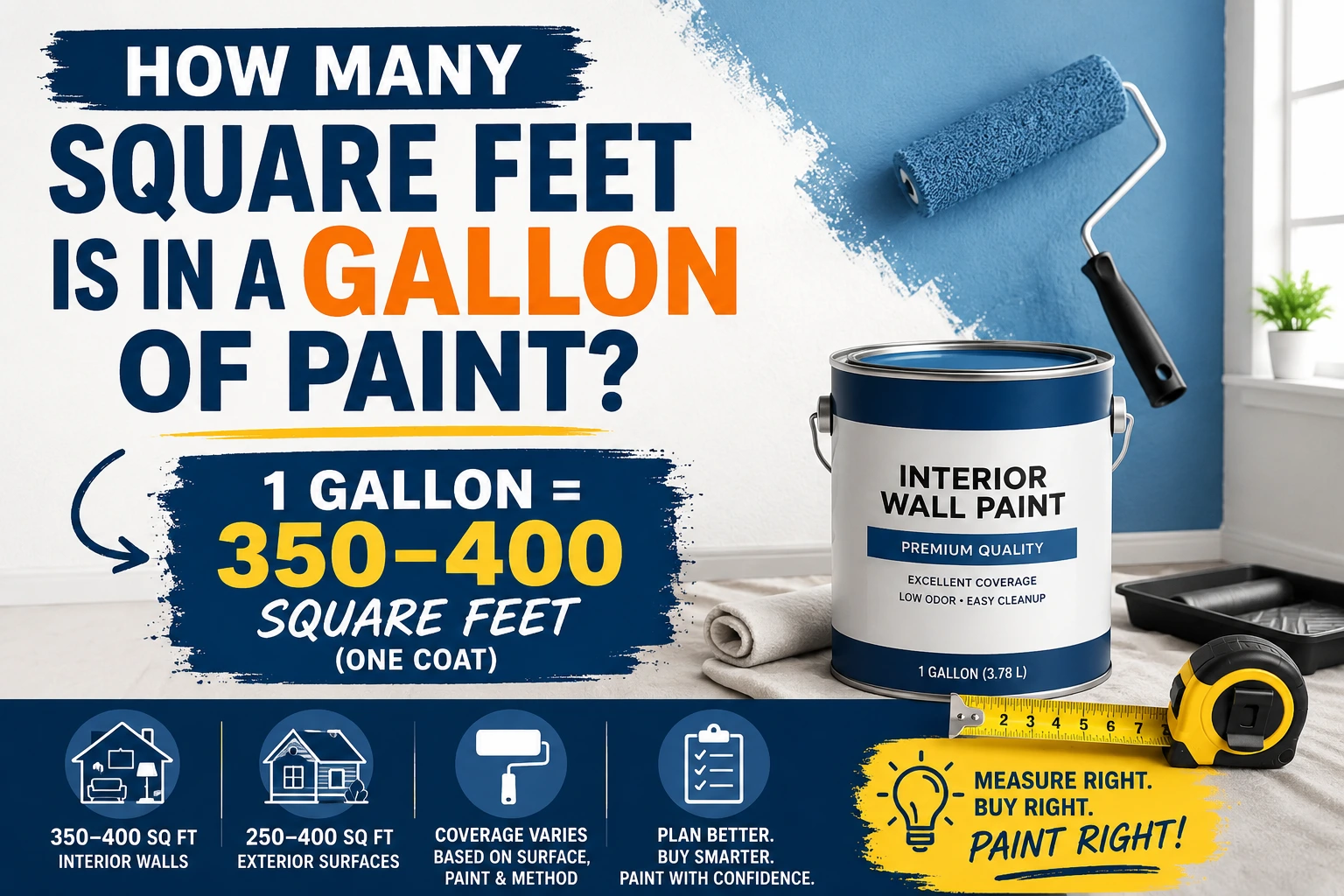
In most situations, one gallon of paint covers approximately 350 to 400 square feet with a single coat. However, actual coverage depends on several factors, including the surface condition, paint quality, color changes, and application method.
This guide explains paint coverage in detail and shows you how to estimate exactly how much paint you need for your next project.
Understanding Paint Coverage
Paint coverage refers to the amount of surface area that a specific quantity of paint can cover.
Manufacturers typically list coverage information directly on paint cans and product labels. While the exact figure varies by brand and product type, most paints follow a similar coverage range.
Standard Coverage Per Gallon
A typical gallon of paint covers:
| Paint Type | Coverage Per Gallon |
|---|---|
| Interior Wall Paint | 350–400 sq ft |
| Exterior Paint | 250–400 sq ft |
| Primer | 200–300 sq ft |
| High-Quality Paint | 350–450 sq ft |
As a general rule, you can estimate:
1 gallon of paint = about 400 square feet of coverage
for smooth, previously painted surfaces.
Why Coverage Varies
Not every wall absorbs paint equally.
Coverage changes depending on:
- Surface texture
- Porosity
- Existing paint color
- Number of coats
- Paint formulation
- Application method
These variables can significantly impact the amount of paint required.
How Many Square Feet Is in a Gallon of Paint on Average?
The most commonly accepted estimate is:
One gallon of paint covers approximately 350 to 400 square feet.
To visualize this:
- A small bedroom often requires about one gallon.
- A standard two-car garage wall may require more than one gallon.
- An average living room may need 1–2 gallons depending on ceiling height.
For rough planning purposes:
| Gallons of Paint | Approximate Coverage |
| 1 Gallon | 350–400 sq ft |
| 2 Gallons | 700–800 sq ft |
| 3 Gallons | 1,050–1,200 sq ft |
| 5 Gallons | 1,750–2,000 sq ft |
Remember that these figures are based on one coat.
Paint Coverage Chart
The following chart helps estimate paint requirements based on area size.
| Surface Area | Paint Needed |
| 200 sq ft | 0.5 gallon |
| 400 sq ft | 1 gallon |
| 800 sq ft | 2 gallons |
| 1,200 sq ft | 3 gallons |
| 1,600 sq ft | 4 gallons |
| 2,000 sq ft | 5 gallons |
For two coats, simply double the paint quantity.
Factors That Affect Paint Coverage
Understanding these factors can improve your paint estimates.
Surface Type
Smooth walls generally require less paint than rough surfaces.
Examples of high-absorption surfaces include:
- Stucco
- Brick
- Concrete
- Textured drywall
- Raw wood
These materials absorb more paint and reduce coverage.
Number of Coats
Many painting projects require two coats.
A second coat:
- Improves durability
- Provides better color consistency
- Eliminates streaks
- Enhances appearance
If one gallon covers 400 square feet for one coat, it may only cover 200 square feet for two coats.
Paint Quality
Premium paints often contain more solids and pigments.
Benefits include:
- Better hiding power
- Improved durability
- Greater coverage
- Fewer coats needed
Although premium paint costs more upfront, it can reduce overall paint consumption.
Color Changes
Changing from a dark color to a light color usually requires additional coats.
Examples include:
- Black to white
- Navy blue to beige
- Red to cream
These dramatic color transitions often increase paint usage significantly.
Application Method
Coverage also depends on how paint is applied.
| Method | Coverage Efficiency |
| Brush | Moderate |
| Roller | High |
| Paint Sprayer | Lower |
Paint sprayers can produce overspray, resulting in greater paint consumption.
How to Calculate Paint Coverage for Any Room
Estimating paint needs is easier than most people think.
Step 1: Measure the Walls
Measure:
- Length of each wall
- Height of the walls
For example:
- Room length: 12 feet
- Room width: 10 feet
- Wall height: 8 feet
Step 2: Calculate Surface Area
Formula:
Wall Area = Perimeter × Height
Perimeter:
12 + 10 + 12 + 10 = 44 feet
Area:
44 × 8 = 352 square feet
Step 3: Adjust for Doors and Windows
Subtract openings:
- Standard door = 20 sq ft
- Average window = 15 sq ft
Example:
352 − 35 = 317 square feet
Step 4: Determine Paint Quantity
If one gallon covers 400 square feet:
317 ÷ 400 = 0.79 gallons
You would purchase one gallon for one coat.
For two coats:
317 × 2 = 634 sq ft
634 ÷ 400 = 1.59 gallons
You would purchase two gallons.
Real-World Paint Coverage Examples
Small Bedroom
Dimensions:
- 10 ft × 10 ft
- 8 ft ceiling
Estimated paintable area:
Approximately 300–350 square feet
Paint needed:
- One coat: 1 gallon
- Two coats: 2 gallons
Living Room
Dimensions:
- 15 ft × 20 ft
- 9 ft ceiling
Paintable area:
Approximately 600–700 square feet
Paint needed:
- One coat: 2 gallons
- Two coats: 4 gallons
Exterior House Wall
Dimensions:
- 40 ft × 10 ft
Area:
400 square feet
Paint needed:
- Smooth siding: 1 gallon
- Rough siding: 1.5–2 gallons
Interior vs Exterior Paint Coverage
Coverage rates differ between interior and exterior products.
| Feature | Interior Paint | Exterior Paint |
| Average Coverage | 350–400 sq ft | 250–400 sq ft |
| Durability | Moderate | High |
| Weather Resistance | Low | High |
| Paint Thickness | Standard | Thicker |
Exterior paint often covers slightly less area because it contains additives designed to withstand weather conditions.
Common Paint Estimation Mistakes
Many homeowners underestimate paint requirements.
Common mistakes include:
- Ignoring second coats
- Forgetting ceilings
- Not subtracting windows and doors
- Underestimating textured surfaces
- Buying paint from different batches
- Assuming all paints cover equally
Avoiding these mistakes can save both time and money.
Expert Tips to Reduce Paint Waste
Professional painters use several techniques to maximize paint coverage.
Use Primer When Needed
Primer creates a uniform surface and improves paint adhesion.
Clean Walls Before Painting
Dust and grease reduce paint performance.
Use Quality Rollers
High-quality rollers distribute paint more evenly.
Buy Slightly More Than Estimated
A small surplus helps with future touch-ups.
Follow Manufacturer Instructions
Each paint product has recommended coverage rates and application methods.
When You Need More Than One Gallon
One gallon may not be enough when:
- Painting large rooms
- Applying multiple coats
- Covering dark colors
- Painting textured walls
- Painting exterior surfaces
- Using lower-quality paint
For most average-sized rooms, expect to use between one and two gallons.
For entire homes, requirements can range from 10 to 30 gallons depending on size and complexity.
Frequently Asked Questions
1. How many square feet does one gallon of paint cover?
Most paints cover between 350 and 400 square feet per gallon with one coat on a smooth surface.
2. Does a second coat require the same amount of paint?
Generally yes. Two coats usually double the total paint requirement.
3. How much paint do I need for a 12×12 room?
Most 12×12 rooms require approximately 1 to 2 gallons depending on wall height and the number of coats.
4. Does paint coverage include ceilings?
No. Wall coverage estimates typically exclude ceilings unless specifically calculated.
5. Can one gallon of paint cover an entire room?
Yes, a gallon can cover many small rooms with one coat, but larger rooms or projects often require additional paint.
Conclusion
If you have been wondering how many square feet is in a gallon of paint, the simple answer is that one gallon typically covers 350 to 400 square feet with a single coat on a smooth surface. However, actual coverage depends on wall texture, paint quality, color changes, application method, and the number of coats required.
Before starting any painting project, measure your surfaces carefully and use the coverage information provided by the paint manufacturer. Accurate estimates help prevent shortages, reduce waste, and ensure a smoother painting experience. Whether you’re refreshing a bedroom or repainting an entire home, understanding paint coverage is the key to buying the right amount of paint and achieving professional-looking results.
discover more
how many square feet are in the world