

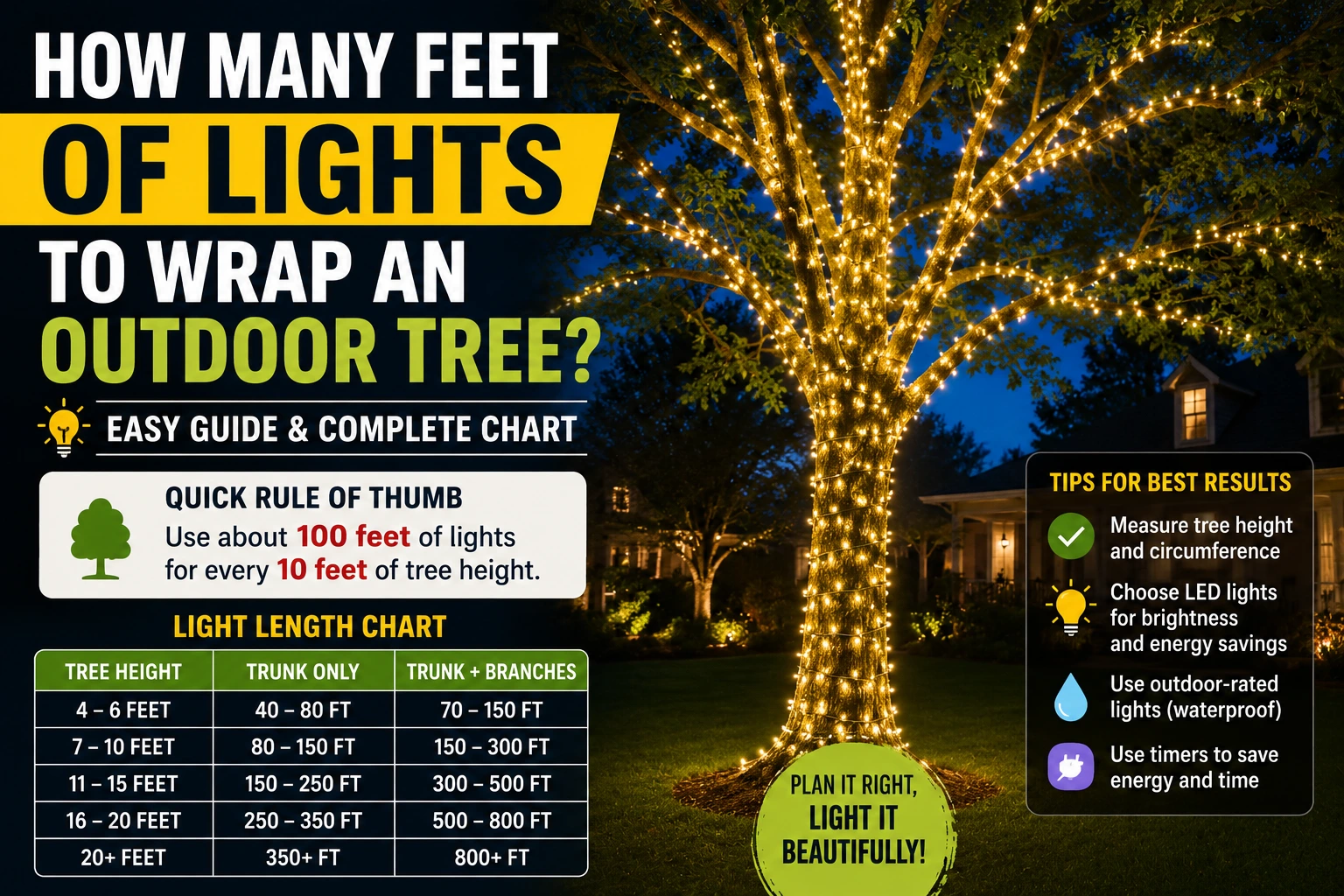
If you are wondering how many feet of lights to wrap an outdoor tree, the answer depends on the tree’s height, trunk circumference, branch coverage, and the spacing between the lights. In general, most homeowners use 100 feet of lights for every 10 feet of tree height when wrapping both the trunk and major branches.
Outdoor tree lighting creates a beautiful and welcoming atmosphere during holidays, parties, and year-round landscaping projects. However, many people either buy too few lights and end up with sparse coverage or purchase far more than needed.
Knowing how to calculate the correct light length helps you:
- Save money
- Avoid cluttered wiring
- Create balanced lighting
- Achieve a professional appearance
Whether you are decorating a small front-yard tree or wrapping a large backyard oak, this guide will help you determine exactly how many feet of lights you need.
Why Tree Light Measurements Matter
Tree lighting is not just about plugging in a few strands. Proper measurements create cleaner and more attractive results.
Avoiding Too Few Lights
Using too few lights can make the tree look incomplete or uneven.
Common problems include:
- Dark gaps
- Poor brightness
- Uneven wrapping
- Weak visual impact
Careful planning prevents these issues.
Preventing Excess Waste
Buying too many lights can:
- Increase costs
- Create tangled wires
- Cause overcrowded branches
- Waste electricity
The right estimate keeps your project efficient and organized.
How Many Feet of Lights to Wrap an Outdoor Tree?
The exact amount varies by tree size and lighting style, but there are reliable guidelines.
General Rule of Thumb
A common recommendation is:
| Tree Height | Suggested Light Length |
|---|---|
| 4–6 feet | 50–100 feet |
| 7–8 feet | 150 feet |
| 9–10 feet | 200 feet |
| 12–15 feet | 300–500 feet |
| 20+ feet | 800+ feet |
Trees with dense branches require more lights.
Quick Estimation Formula
A basic lighting estimate formula is:
Tree Height×10=Approximate Feet of Lights
For example, a 10-foot tree would need approximately:
10×10=100 feet of lights
This estimate works well for moderate trunk and branch wrapping.
Outdoor Tree Light Calculator Basics
To estimate accurately, you need a few measurements.
Measuring Tree Height
Use a tape measure or estimate the tree’s height from the ground to the highest visible branch.
Smaller ornamental trees usually range from:
- 6 to 12 feet
Larger shade trees may exceed:
- 20 feet
Height directly affects total light length.
Measuring Tree Circumference
Wrap a tape measure around the trunk to determine circumference.
Larger trunks need:
- More wraps
- More spacing
- Longer light strands
Thick trunks can use double the lights compared to thin decorative trees.
Determining Wrap Spacing
The spacing between wraps changes the final look.
Common spacing styles include:
| Style | Distance Between Wraps |
|---|---|
| Tight professional wrap | 2–3 inches |
| Standard decorative wrap | 4–6 inches |
| Minimal coverage | 8–12 inches |
Closer spacing requires significantly more lights.
Tree Light Length Chart by Tree Size
The chart below provides a more detailed estimate for common outdoor trees.
Small Trees
| Tree Height | Trunk Only | Trunk + Branches |
|—|—|
| 4 feet | 40–50 feet | 70–100 feet |
| 6 feet | 60–80 feet | 100–150 feet |
Small trees are ideal for beginners because they are easier to decorate safely.
Medium Trees
| Tree Height | Trunk Only | Trunk + Branches |
|—|—|
| 8 feet | 80–120 feet | 150–250 feet |
| 10 feet | 100–150 feet | 200–300 feet |
These are common front-yard landscaping trees.
Large Trees
| Tree Height | Trunk Only | Trunk + Branches |
|—|—|
| 15 feet | 200 feet | 400–500 feet |
| 20 feet | 300 feet | 700–1,000 feet |
Large trees often require professional installation for safety and efficiency.
How to Wrap Lights Around an Outdoor Tree
Proper installation improves both appearance and durability.
Step-by-Step Process
Follow these simple steps:
- Test all lights before installation
- Start near the power source
- Wrap the trunk evenly
- Continue upward toward major branches
- Secure loose sections carefully
- Plug in sections periodically to check spacing
Consistent spacing creates a polished look.
Safety Tips
Outdoor lighting safety is extremely important.
Always:
- Use outdoor-rated extension cords
- Keep plugs off wet ground
- Avoid damaged wires
- Use ladders carefully
- Turn off power before adjustments
Waterproof lights are essential for outdoor use.
Best Types of Lights for Outdoor Trees
Not all string lights perform equally outdoors.
LED vs Incandescent
LED lights are now the preferred choice.
Benefits of LED lights:
- Lower energy usage
- Longer lifespan
- Brighter illumination
- Reduced heat output
Incandescent lights may appear warmer but consume more electricity.
Warm White vs Multicolor
Warm white lights create:
- Elegant landscapes
- Cozy atmospheres
- Modern outdoor aesthetics
Multicolor lights provide:
- Festive holiday appearance
- Fun decorative style
- Vibrant displays
The best option depends on your design preference.
Waterproof Ratings
Choose lights labeled:
- Outdoor rated
- Weather resistant
- Waterproof or water resistant
Outdoor conditions can damage indoor-only lighting quickly.
Common Mistakes When Wrapping Tree Lights
Many homeowners make avoidable decorating errors.
Uneven Spacing
Inconsistent wrapping creates:
- Crowded sections
- Dark gaps
- Unbalanced brightness
Measure spacing carefully as you work.
Using Indoor Lights Outdoors
Indoor lights are not designed for:
- Rain
- Snow
- Wind
- UV exposure
Using indoor lights outside creates safety hazards.
Overloading Circuits
Too many connected strands can:
- Blow fuses
- Trip breakers
- Overheat wires
Always follow manufacturer connection limits.
Real World Examples of Tree Lighting
Real examples help estimate lighting more accurately.
Front Yard Decorative Trees
A typical 8-foot ornamental maple may require:
- 100 feet for trunk wrapping
- 200 feet for trunk and lower branches
This creates a balanced decorative effect.
Large Backyard Trees
A mature oak tree may require:
- 500 feet or more
- Multiple extension cords
- Professional-grade LED strands
Large canopy trees need extensive coverage.
Commercial Landscape Trees
Hotels, shopping centers, and parks often use:
- Thousands of feet of lighting
- Commercial LED systems
- Timers and smart controls
Professional installations usually feature tighter wrap spacing.
Expert Tips for Professional Looking Tree Lighting
Professional decorators use several techniques to improve visual appeal.
Lighting Patterns
Popular styles include:
- Spiral wrapping
- Zigzag branch lighting
- Trunk-only minimalist lighting
- Full canopy illumination
Choose a pattern that matches your landscape style.
Timer and Smart Plug Usage
Timers automatically:
- Turn lights on at dusk
- Save electricity
- Improve convenience
Smart plugs allow app-based control from your phone.
Energy Saving Tips
Reduce power usage by:
- Choosing LED lights
- Using timers
- Limiting operating hours
- Avoiding excessive overlap
LED systems significantly reduce electricity costs.
How Weather Affects Outdoor Tree Lights
Weather conditions influence both safety and durability.
Rain and Snow
Moisture can damage poor-quality lights.
Always use:
- Waterproof connectors
- Outdoor-rated plugs
- GFCI outlets
These reduce shock risks.
Wind Exposure
Strong winds may loosen light strands or damage branches.
Secure lights carefully with:
- Twist ties
- Outdoor clips
- Soft fasteners
Avoid tightening wires too aggressively around branches.
Heat and Sunlight
Long-term UV exposure can weaken low-quality wiring.
Choose commercial-grade outdoor lights for:
- Better insulation
- Longer lifespan
- Improved weather resistance
Benefits of Wrapping Outdoor Trees With Lights
Outdoor lighting improves both beauty and functionality.
Enhanced Curb Appeal
Tree lighting creates:
- Elegant landscaping
- Better nighttime appearance
- Increased holiday atmosphere
Professionally lit trees often become focal points.
Improved Outdoor Ambiance
Lights make outdoor spaces:
- More welcoming
- More relaxing
- Safer at night
This is especially useful for patios and gardens.
Added Property Value Appeal
Well-designed landscape lighting can improve:
- Home presentation
- Buyer impressions
- Exterior aesthetics
Many homeowners use lighting to enhance outdoor living areas year-round.
Frequently Asked Questions
How many feet of lights to wrap an outdoor tree?
Most trees require about 100 feet of lights for every 10 feet of height depending on branch coverage and spacing.
How do I calculate lights for a tree?
Measure the tree height and multiply by about 10 for a basic estimate.
How many lights does a 6-foot outdoor tree need?
A 6-foot tree usually needs 50–150 feet of lights depending on whether you wrap branches.
Are LED lights best for outdoor trees?
Yes. LED lights are energy efficient, durable, brighter, and safer for outdoor use.
How far apart should tree light wraps be?
Most decorators use spacing between 3 and 6 inches for balanced coverage.
10. Conclusion
Understanding how many feet of lights to wrap an outdoor tree helps you create a beautiful and professional-looking display without overspending or running short on materials. The right amount depends on tree height, trunk size, branch coverage, and wrap spacing.
For most outdoor trees, using approximately 100 feet of lights per 10 feet of height provides a strong starting point. By measuring carefully, choosing quality outdoor-rated LED lights, and following safe installation practices, you can transform your landscape into an eye-catching nighttime feature for holidays or year-round outdoor beauty.
Discover more
how many square feet per chicken in run