

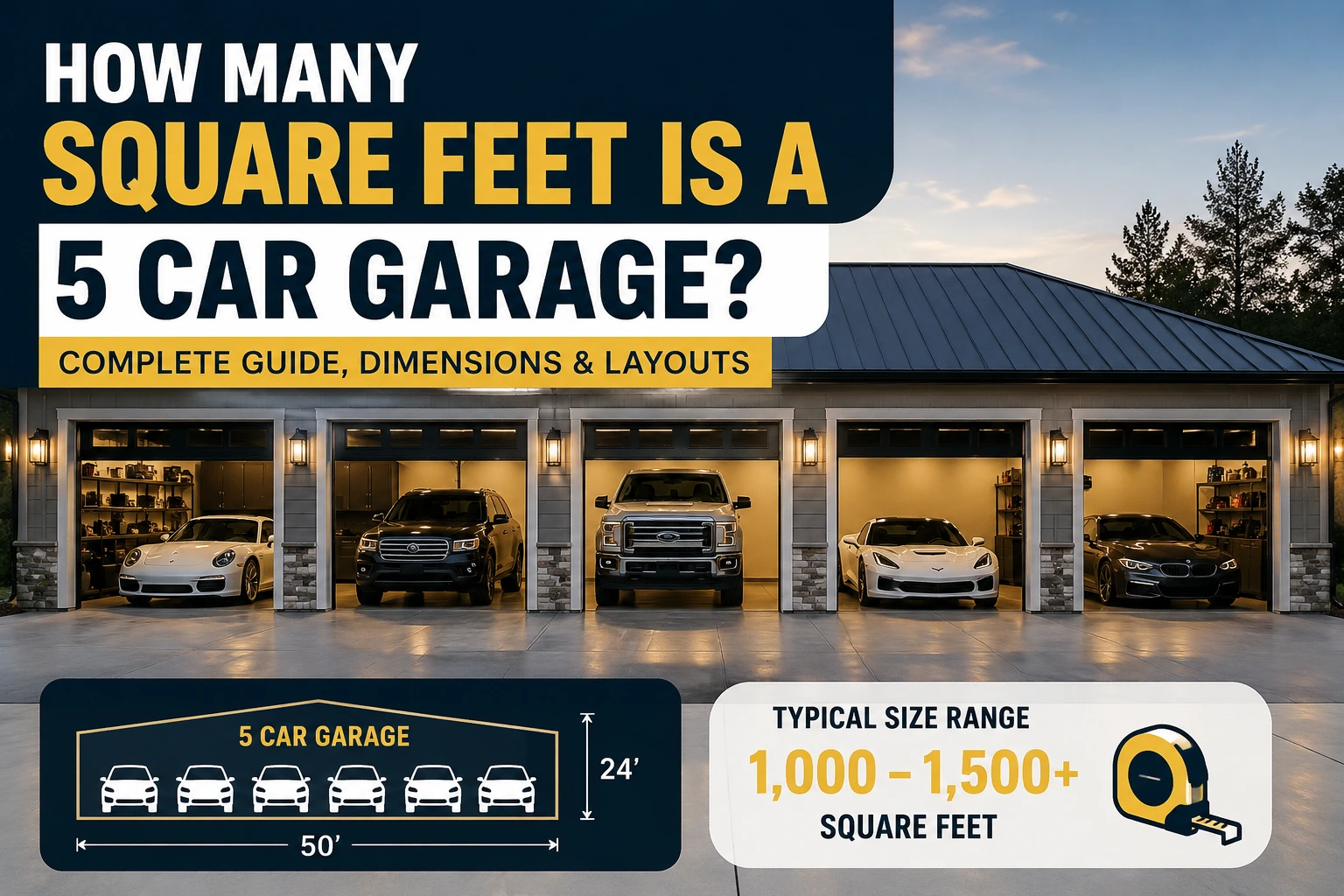
If you are planning a large garage project, one of the first questions you may ask is: how many square feet is a 5 car garage?
The answer depends on several factors, including the layout, vehicle size, storage needs, and whether you want extra space for a workshop or tools. In most cases, a standard 5 car garage ranges between 1,000 and 1,500 square feet.
However, some luxury or custom garages can exceed 2,000 square feet.
Understanding garage dimensions is important before starting construction. A properly sized garage improves functionality, increases property value, and provides enough room for vehicles, storage, and daily use.
This guide explains everything you need to know about 5 car garage square footage, layouts, dimensions, costs, and design tips.
Understanding the Average Size of a 5 Car Garage
A 5 car garage is much larger than a typical residential garage. Most standard home garages are built for one or two cars, while a 5 car garage is designed for:
- Large households
- Car enthusiasts
- RV or truck owners
- Workshop spaces
- Extra storage
On average, a 5 car garage is usually:
| Garage Type | Approximate Square Feet |
|---|---|
| Compact 5 Car Garage | 1,000–1,100 sq ft |
| Standard 5 Car Garage | 1,200–1,400 sq ft |
| Luxury 5 Car Garage | 1,500–2,000+ sq ft |
The final size depends heavily on how much extra room you want around the vehicles.
Standard Dimensions for a 5 Car Garage
When calculating square footage, you multiply the width by the depth.
Square Footage=Width×Depth
For example:
- A garage measuring 50 feet wide and 24 feet deep equals:
50×24=1200 square feet
Width Requirements
Most 5 car garages are between:
- 45 to 60 feet wide
Each vehicle generally needs:
- 9 to 12 feet of width
- Extra room for opening doors comfortably
Depth Requirements
Typical garage depth ranges from:
- 20 to 30 feet deep
Larger trucks and SUVs may require deeper spaces.
Ceiling Height Considerations
Standard garage ceilings are often:
- 8 to 10 feet high
But taller garages may include:
- Car lifts
- RV storage
- Overhead storage racks
Luxury garages sometimes use 12-foot ceilings or higher.
Common 5 Car Garage Layouts
The layout greatly affects how many square feet a 5 car garage needs.
Side-by-Side Layout
This is the most popular option.
All vehicles are parked next to each other in a single row.
Benefits include:
- Easy parking access
- Better organization
- Convenient daily use
Typical dimensions:
- 50 ft × 24 ft
- Around 1,200 sq ft
Tandem Layout
In a tandem garage, some vehicles park behind others.
Benefits:
- Smaller lot requirement
- Reduced width
Drawbacks:
- Cars may block each other
- Less convenient
Typical dimensions:
- 30 ft × 40 ft
- Around 1,200 sq ft
L-Shaped Garage Design
An L-shaped layout separates parking into two sections.
This style works well for:
- Corner lots
- Workshop areas
- Extra storage
Typical dimensions vary widely but often exceed:
- 1,400 square feet
Square Footage Examples for Different 5 Car Garage Designs
Here is a quick comparison of common garage sizes.
| Garage Dimensions | Approximate Square Feet | Best For |
|---|---|---|
| 48 × 24 | 1,152 sq ft | Standard cars |
| 50 × 24 | 1,200 sq ft | Comfortable parking |
| 52 × 28 | 1,456 sq ft | SUVs and storage |
| 60 × 30 | 1,800 sq ft | Luxury garage setup |
| 40 × 30 | 1,200 sq ft | Tandem layout |
These dimensions provide enough room for most residential needs.
Factors That Affect the Size of a 5 Car Garage
Several important factors influence the total square footage.
Vehicle Size
Compact cars require less room than:
- Pickup trucks
- SUVs
- Vans
- Luxury vehicles
If you own oversized vehicles, you may need wider parking bays.
Storage Needs
Many homeowners use garages for more than parking.
Additional storage may include:
- Bikes
- Lawn equipment
- Seasonal decorations
- Tools
- Cabinets
Adding storage increases square footage requirements.
Workshop Space
Some 5 car garages include:
- Woodworking stations
- Home gyms
- Hobby areas
- Mechanical workspaces
A workshop can add hundreds of extra square feet.
Local Building Codes
Your city or county may regulate:
- Garage setbacks
- Maximum building size
- Height restrictions
- Fire safety rules
Always check local codes before building.
How Much Space Does Each Car Need?
To understand how many square feet is a 5 car garage, it helps to calculate the space needed for one vehicle.
A standard parking space is usually:
- 9 feet wide
- 18 feet long
9×18=162 square feet per car
For five cars:
162×5=810 square feet
However, this calculation only covers parking spots. It does not include:
- Walking space
- Storage
- Structural walls
- Door clearance
- Work areas
That is why most real-world 5 car garages exceed 1,000 square feet.
Benefits of a Large 5 Car Garage
A spacious garage offers many advantages.
Extra Storage
You can store:
- Sports equipment
- Holiday decorations
- Outdoor tools
- Emergency supplies
This helps reduce indoor clutter.
Increased Property Value
Large garages often improve resale value, especially in:
- Luxury neighborhoods
- Rural properties
- High-end homes
Buyers appreciate additional covered parking.
Multi-Purpose Functionality
A large garage can become:
- A workshop
- A home gym
- A hobby room
- A recreational area
This flexibility makes the space more valuable.
Better Vehicle Protection
Keeping vehicles indoors protects them from:
- Rain
- Snow
- Sun damage
- Theft
This may also lower maintenance costs over time.
Common Mistakes When Planning a 5 Car Garage
Many homeowners underestimate how much space they actually need.
Ignoring Door Clearance
Cars need room for doors to open comfortably.
Tight spacing quickly becomes frustrating.
Forgetting Storage Needs
Future storage often gets overlooked during planning.
Adding cabinets later may reduce parking space.
Poor Traffic Flow
Vehicles should be able to enter and exit easily.
Avoid layouts that require constant repositioning.
Choosing the Minimum Size
Building the smallest possible garage may save money initially, but it can limit future flexibility.
Slightly increasing dimensions now can prevent expensive expansions later.
Expert Tips for Designing the Perfect 5 Car Garage
A well-designed garage improves convenience and long-term usability.
Plan for Future Vehicles
Your future vehicles may be larger than your current ones.
Leave extra room whenever possible.
Install Quality Lighting
Bright LED lighting improves:
- Visibility
- Safety
- Productivity
Especially in workshop areas.
Use Durable Flooring
Popular options include:
- Epoxy coatings
- Polished concrete
- Rubber flooring
These surfaces resist stains and wear.
Add Smart Storage Solutions
Wall-mounted storage systems help maximize space.
Consider:
- Overhead racks
- Tool cabinets
- Slatwall systems
Improve Ventilation
Good airflow reduces:
- Moisture buildup
- Odors
- Heat accumulation
Ventilation is especially important for attached garages.
Cost Considerations for a 5 Car Garage
The cost of building a 5 car garage varies greatly depending on:
- Location
- Materials
- Foundation type
- Electrical work
- Custom finishes
Average costs typically range from:
| Garage Type | Estimated Cost |
|---|---|
| Basic Garage | $50,000–$80,000 |
| Mid-Range Garage | $80,000–$120,000 |
| Luxury Garage | $120,000–$250,000+ |
Detached garages often cost more because they require:
- Separate foundations
- Utility connections
- Additional framing
Adding premium features can significantly increase costs.
Is a 5 Car Garage Worth It?
For many homeowners, the answer is yes.
A 5 car garage is especially useful for:
- Large families
- Car collectors
- Small business owners
- Hobbyists
- Homeowners needing extra storage
However, it may not be necessary for everyone.
Before building, consider:
- Your property size
- Budget
- Long-term needs
- Local zoning restrictions
A properly planned garage can serve your household for decades.
FAQs
1. What is the average square footage of a 5 car garage?
Most 5 car garages range from 1,000 to 1,500 square feet, depending on layout and storage needs.
2. What are common dimensions for a 5 car garage?
Typical dimensions include:
- 50 × 24 feet
- 52 × 28 feet
- 60 × 30 feet
3. Can a 5 car garage include storage space?
Yes. Many homeowners add:
- Cabinets
- Workshops
- Overhead storage
- Utility areas
This usually increases total square footage.
4. How much space does each car require in a garage?
A standard parking spot requires about 162 square feet, but additional room is needed for movement and storage.
5. Is a detached 5 car garage better than an attached one?
Detached garages offer more flexibility and privacy, while attached garages provide easier home access. The best option depends on your property and needs.
Conclusion
So, how many square feet is a 5 car garage? In most cases, the answer falls between 1,000 and 1,500 square feet, although luxury designs can be much larger.
The ideal garage size depends on your vehicles, storage requirements, layout preferences, and future plans. A well-designed 5 car garage offers more than parking space. It can improve organization, increase property value, and create a highly functional extension of your home.
Before building, carefully evaluate your available land, budget, and long-term goals. Choosing the right dimensions now can save time, money, and frustration in the future
Discover more
how many cubic feet is a ton of gravel