

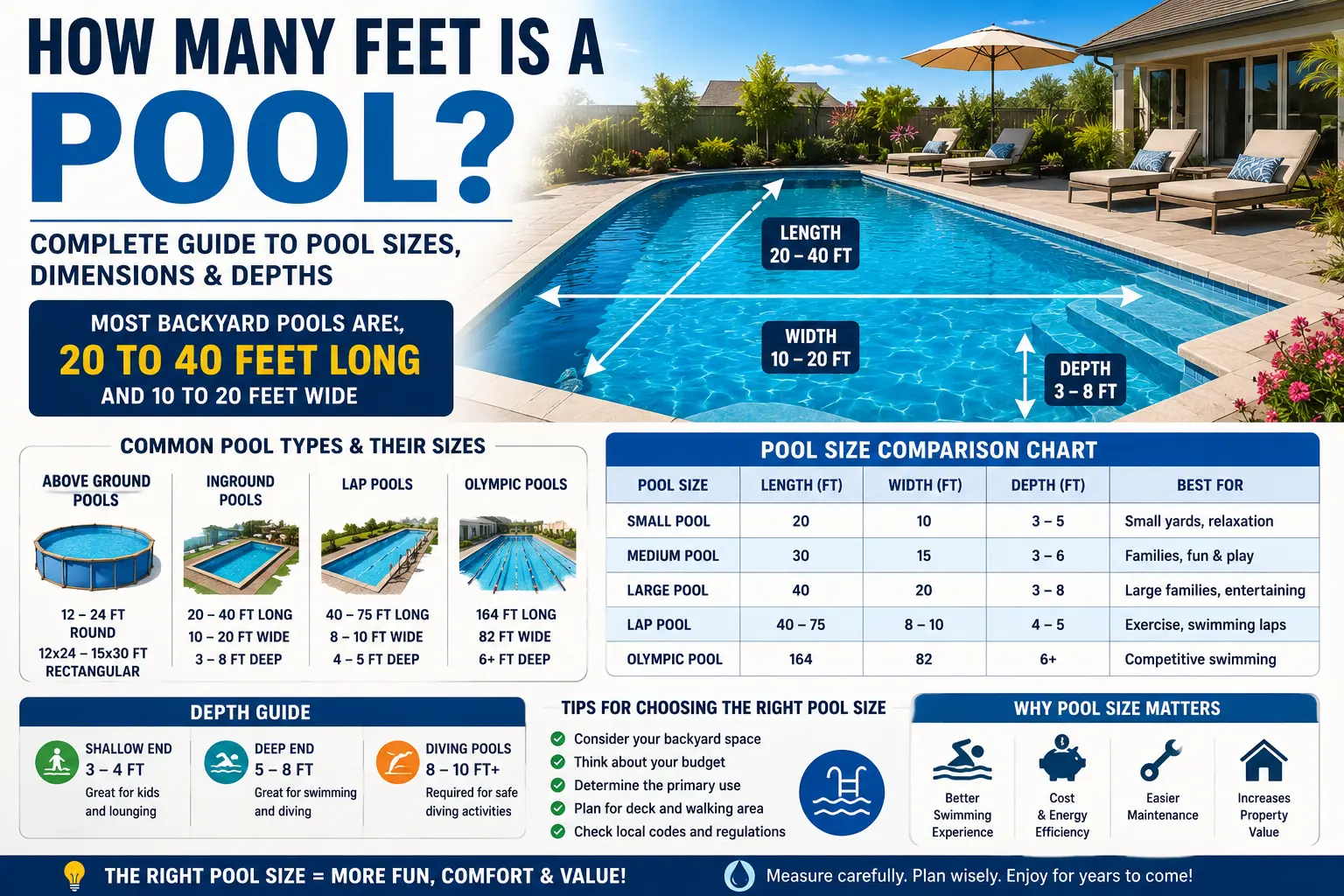
If you are planning to install a swimming pool or simply curious about standard pool sizes, you may wonder: how many feet is a pool? The answer depends on the type of pool, its purpose, and where it is used.
Residential swimming pools are commonly between 20 and 40 feet long, while competitive and Olympic pools are much larger. Pool width and depth also vary depending on whether the pool is designed for recreation, exercise, or professional swimming.
Understanding pool dimensions helps with:
- Backyard planning
- Budgeting
- Safety
- Maintenance
- Swimming comfort
- Property design
Whether you are choosing an above-ground pool, an inground pool, or a lap pool, this guide explains standard pool measurements in simple language with charts, examples, and practical tips.
What Does Pool Size Mean?
Pool size usually refers to three main measurements:
- Length
- Width
- Depth
All three dimensions affect:
- Swimming space
- Water capacity
- Installation cost
- Maintenance requirements
Pool Length
Length is the distance from one end of the pool to the other.
Most residential pools range from:
- 20 to 40 feet long
Longer pools are better for:
- Exercise
- Lap swimming
- Large families
Pool Width
Width measures side-to-side distance.
Common residential widths include:
- 10 feet
- 12 feet
- 16 feet
- 20 feet
Wider pools provide more room for multiple swimmers.
Pool Depth
Depth refers to how deep the water is.
Residential pools often range from:
- 3 feet to 8 feet deep
The shallow end is usually safer for children and casual swimming.
How Many Feet Is a Pool?
The average backyard swimming pool is typically:
- 20–40 feet long
- 10–20 feet wide
- 3–8 feet deep
However, pool dimensions vary widely.
Standard Residential Pool Sizes
Here are common home pool sizes:
| Pool Type | Common Dimensions |
|---|---|
| Small Pool | 20 × 10 ft |
| Medium Pool | 30 × 15 ft |
| Large Pool | 40 × 20 ft |
| Lap Pool | 40–75 ft long |
A medium-sized pool works well for most families.
Commercial and Olympic Pool Sizes
Commercial pools are much larger.
| Pool Type | Length |
|---|---|
| Hotel Pool | 30–50 ft |
| Community Pool | 50–75 ft |
| Olympic Pool | 164 feet |
Olympic swimming pools are exactly:
50 meters=164 feet approximately
These pools are designed for professional competition.
Common Pool Dimensions Chart
| Pool Category | Length | Width | Depth |
|---|---|---|---|
| Small Backyard Pool | 20 ft | 10 ft | 3–5 ft |
| Family Pool | 30 ft | 15 ft | 3–6 ft |
| Large Residential Pool | 40 ft | 20 ft | 3–8 ft |
| Lap Pool | 40–75 ft | 8–10 ft | 4–5 ft |
| Olympic Pool | 164 ft | 82 ft | 6+ ft |
This chart helps compare common swimming pool sizes.
Types of Pools and Their Sizes
Different pool types serve different purposes.
Above Ground Pools
Above-ground pools are usually smaller and more affordable.
Common sizes:
- 12 ft round
- 15 ft round
- 18 ft round
- 24 ft round
Rectangular above-ground pools may measure:
- 12 × 24 ft
- 15 × 30 ft
These pools are ideal for:
- Families
- Seasonal use
- Smaller budgets
Inground Pools
Inground pools offer:
- More customization
- Greater durability
- Larger sizes
Most inground pools range from:
- 20 to 40 feet long
Popular dimensions include:
- 16 × 32 ft
- 18 × 36 ft
- 20 × 40 ft
Lap Pools
Lap pools are designed mainly for exercise.
Typical lap pool lengths:
- 40–75 feet
Widths are usually narrower:
- 8–10 feet
These pools maximize swimming space in limited backyards.
Kiddie Pools
Children’s pools are much smaller.
Common sizes:
- 6–10 feet wide
- 1–2 feet deep
Safety is the main priority.
Average Pool Length by Purpose
Pool dimensions often depend on how the pool will be used.
Family Recreation
Family pools prioritize:
- Relaxation
- Play
- Social gatherings
Common family pool size:
- 30 × 15 feet
This size provides enough room without overwhelming the backyard.
Exercise and Fitness
Fitness-focused pools are longer.
Recommended lap pool lengths:
- 40–75 feet
Longer pools reduce turning frequency during swimming.
Competitive Swimming
Professional competition pools must follow strict standards.
Olympic pool size:
- 164 feet long
- 82 feet wide
These pools support multiple racing lanes.
Pool Depth Guide
Depth matters just as much as length.
Shallow Pools
Shallow pools are usually:
- 3–5 feet deep
Best for:
- Children
- Lounging
- Casual swimming
Benefits of Shallow Pools
Advantages include:
- Lower water usage
- Safer environment
- Easier maintenance
Deep Pools
Deep pools typically reach:
- 6–8 feet
These pools are better for:
- Diving
- Jumping
- Advanced swimming
Diving Pools
Pools with diving boards often require:
- 8–10 feet minimum depth
Safety regulations vary by location.
How to Measure a Pool
Measuring a pool accurately is important for:
- Covers
- Maintenance
- Renovation
- Water treatment
Measuring Length
Measure from one end to the other at the longest point.
Measuring Width
Measure the widest side of the pool.
Measuring Depth
Measure:
- Shallow end
- Deep end
Average depth may be calculated if needed.
Pool Size Comparison Chart
| Pool Size | Best For |
|---|---|
| 20 × 10 ft | Small yards |
| 30 × 15 ft | Families |
| 40 × 20 ft | Large backyards |
| 50+ ft | Fitness swimming |
| 164 ft | Olympic competition |
Choosing the Right Pool Size
Choosing the right dimensions depends on several factors.
Backyard Space
Small yards may only fit:
- Compact pools
- Plunge pools
- Narrow lap pools
Large properties can support:
- Full-size family pools
- Luxury resort-style pools
Budget Considerations
Larger pools cost more because of:
- Excavation
- Materials
- Water
- Heating
- Maintenance
A smaller pool often reduces long-term costs.
Number of Swimmers
Large families usually benefit from wider pools with more swimming space.
For couples or single swimmers:
- Smaller pools may be enough
Common Pool Shapes and Dimensions
Pools come in many shapes.
Popular options include:
- Rectangular
- Oval
- Kidney-shaped
- Freeform
- Circular
Rectangular pools are easiest for:
- Measuring
- Swimming laps
- Pool covers
Freeform pools focus more on visual appeal.
Pool Capacity and Water Volume
Pool size directly affects water volume.
A larger pool requires:
- More chemicals
- More filtration
- Higher maintenance costs
Example:
- A standard 16 × 32 ft pool may hold around 13,000–20,000 gallons depending on depth.
Small vs Large Pools
Each pool size has advantages.
Advantages of Small Pools
Small pools:
- Cost less
- Use less water
- Require less maintenance
- Fit smaller backyards
Advantages of Large Pools
Large pools:
- Allow more swimmers
- Improve exercise space
- Create luxury appearance
- Increase recreational options
Common Pool Measurement Mistakes
Many people miscalculate pool dimensions.
Ignoring Depth Variations
Pools with sloped bottoms require careful depth measurements.
Measuring Curved Pools Incorrectly
Freeform pools may need professional measurement methods.
Forgetting Deck Space
Pool areas also need:
- Walking space
- Seating
- Safety clearance
Expert Tips Before Installing a Pool
Before building a pool:
- Check local regulations
- Consider future maintenance
- Plan landscaping
- Think about sun exposure
- Budget for long-term upkeep
Consider Pool Usage First
Ask yourself:
- Will the pool be for exercise?
- Family fun?
- Entertaining guests?
Your answer helps determine ideal dimensions.
Why Pool Size Matters
The right pool size improves:
- Comfort
- Safety
- Functionality
- Property value
A pool that is too small may feel crowded, while an oversized pool can increase maintenance costs unnecessarily.
Careful planning creates a better long-term investment.
9. FAQs
How many feet long is a normal swimming pool?
Most residential swimming pools are between 20 and 40 feet long.
How long is an Olympic swimming pool?
An Olympic pool is approximately 164 feet long.
What is a good pool size for a backyard?
A 30 × 15 foot pool is a popular size for many family backyards.
How deep is a typical residential pool?
Most residential pools range from 3 to 8 feet deep.
Are lap pools longer than regular pools?
Yes. Lap pools are usually longer and narrower to support continuous swimming exercise.
10. Conclusion
Understanding how many feet is a pool helps homeowners and buyers choose the right swimming pool for their needs and available space. Most residential pools are between 20 and 40 feet long, while specialized pools such as lap pools and Olympic pools can be much larger.
The ideal pool size depends on your backyard dimensions, budget, intended use, and maintenance preferences. Whether you want a small relaxation pool, a family-friendly swimming area, or a professional lap pool, knowing standard pool dimensions makes planning easier and helps create a more enjoyable swimming experience.
Discover more
how many feet is the mississippi river