

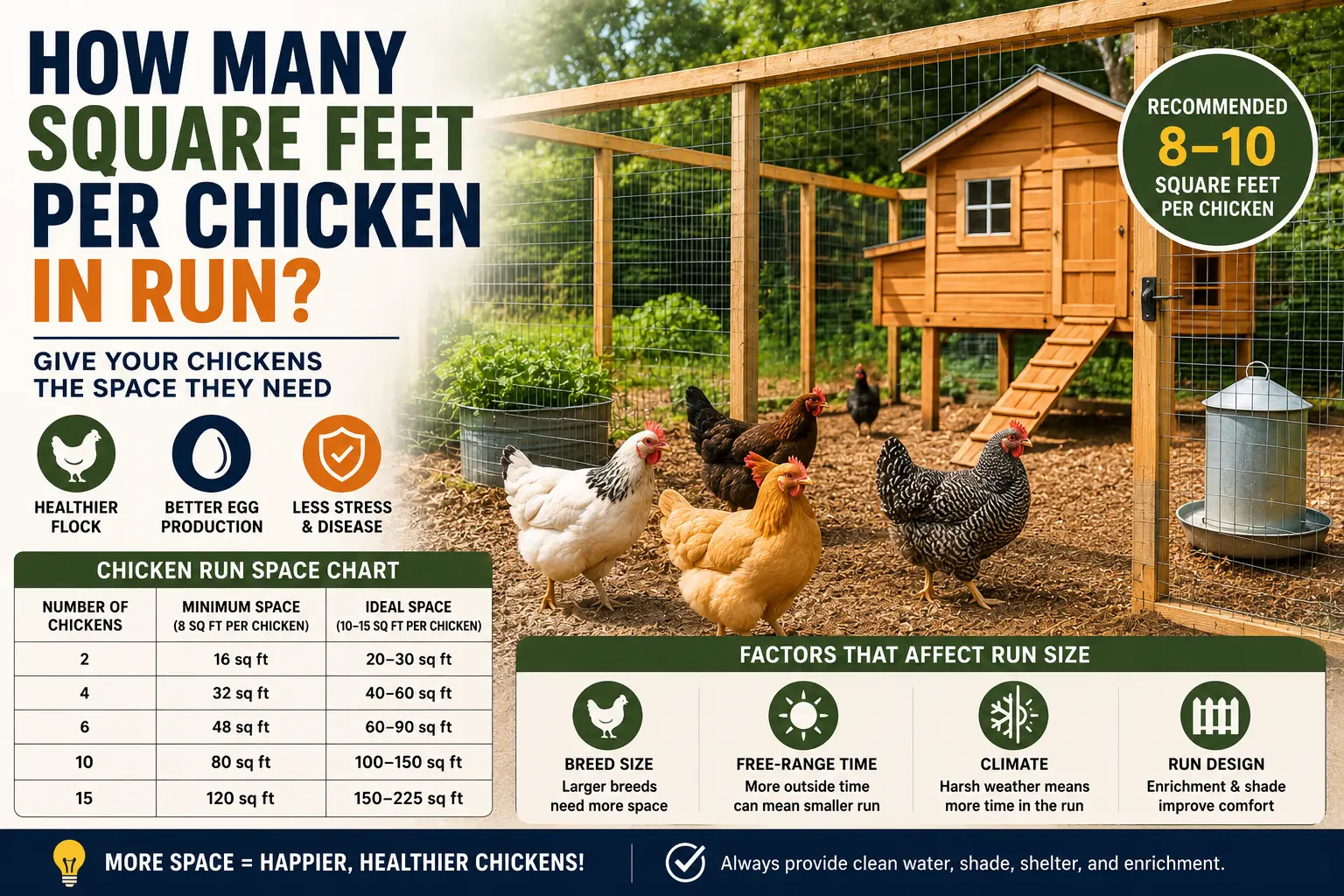
If you are raising backyard chickens, one of the most important questions is how many square feet per chicken in run you should provide. Giving chickens enough outdoor space keeps them healthier, happier, and more productive.
In general, chickens need at least 8 to 10 square feet per chicken in a run. However, more space is always better. Large breeds, active flocks, and chickens that spend most of their day confined to the run may need even more room.
A properly sized chicken run helps:
- Reduce stress
- Prevent fighting
- Improve egg production
- Lower disease risk
- Keep the flock cleaner
Whether you have a few hens in a backyard coop or a larger flock on a homestead, understanding chicken run space requirements is essential for successful poultry keeping.
Why Chicken Run Space Matters
Chicken owners often focus on the coop, but the outdoor run is just as important.
Chickens naturally:
- Scratch the ground
- Peck for food
- Dust bathe
- Explore
- Exercise
Without enough room, chickens can become stressed and unhealthy.
Health Benefits
Adequate run space helps chickens stay physically healthy.
Benefits include:
- Better exercise
- Reduced obesity
- Cleaner feathers
- Lower parasite risk
- Improved immune health
Crowded conditions can lead to:
- Disease spread
- Respiratory problems
- Dirty living conditions
Behavioral Benefits
Chickens have social hierarchies known as the pecking order.
Too little space often causes:
- Aggression
- Feather pecking
- Bullying
- Stress
More room allows weaker birds to avoid dominant hens and reduces conflict.
How Many Square Feet Per Chicken in Run?
The general recommendation for standard chickens is:
| Chicken Type | Minimum Run Space |
|---|---|
| Standard Chickens | 8–10 sq ft each |
| Bantam Chickens | 4–6 sq ft each |
| Large Breeds | 10–15 sq ft each |
| Free-Range Chickens | Smaller runs acceptable |
Most experts recommend aiming for the higher end whenever possible.
Minimum Space Recommendations
Minimum run space works only if:
- Chickens also free-range daily
- The climate allows outdoor activity
- The flock is calm and small
For confined chickens, minimum space may still feel crowded.
Ideal Space Recommendations
Ideal chicken run sizing provides:
- More natural behavior
- Better cleanliness
- Less stress
- Easier maintenance
Many experienced chicken keepers recommend:
- 12–15 square feet per chicken
especially for permanent runs.
Chicken Run Size Chart
Here is a simple chart for common flock sizes.
| Number of Chickens | Minimum Run Size | Ideal Run Size |
|---|---|---|
| 2 Chickens | 16–20 sq ft | 24–30 sq ft |
| 4 Chickens | 32–40 sq ft | 48–60 sq ft |
| 6 Chickens | 48–60 sq ft | 72–90 sq ft |
| 10 Chickens | 80–100 sq ft | 120–150 sq ft |
| 15 Chickens | 120–150 sq ft | 180–225 sq ft |
Larger runs are easier to maintain because waste spreads over a wider area.
Factors That Affect Chicken Run Size
Not all chicken flocks have the same space requirements.
Several factors influence how much room chickens need.
Chicken Breed Size
Some breeds are naturally larger and more active.
Large breeds include:
- Jersey Giants
- Brahmas
- Orpingtons
These chickens require more space than smaller bantam breeds.
Small Breeds
Bantams usually need less room because of their smaller body size.
However, active bantams may still enjoy larger runs.
Free-Range Access
If chickens spend several hours free-ranging daily, the run can be slightly smaller.
Free-ranging allows birds to:
- Explore naturally
- Find insects
- Exercise more
Chickens confined full-time need larger runs.
Climate Conditions
Weather affects how often chickens stay inside the run.
In cold or rainy climates:
- Chickens may spend long periods confined
This increases the need for extra space.
Hot climates also require:
- Shade
- Airflow
- Dust bath areas
Run Design
A well-designed run can feel larger and function better.
Good run features include:
- Multiple feeding stations
- Roosts
- Perches
- Dust bath zones
- Covered areas
Vertical space also improves chicken comfort.
How to Calculate Chicken Run Space
Calculating run size is easy once you know the formula.
Use this formula:
Run Size=Number of Chickens×Square Feet Per Chicken
Example Calculation
Suppose you have:
- 8 chickens
- 10 sq ft per chicken
Calculation:
8×10=80 square feet
Result:
- Your chicken run should be at least 80 square feet
Recommended Run Sizes by Number of Chickens
Here are practical examples for backyard flocks.
4 Chickens
Minimum:
- 32–40 sq ft
Ideal:
- 50+ sq ft
Example dimensions:
- 5 × 10 ft
- 6 × 8 ft
6 Chickens
Minimum:
- 48–60 sq ft
Ideal:
- 72+ sq ft
Example dimensions:
- 6 × 10 ft
- 8 × 9 ft
10 Chickens
Minimum:
- 80–100 sq ft
Ideal:
- 120+ sq ft
Example dimensions:
- 10 × 12 ft
- 12 × 12 ft
Indoor Coop Space vs Outdoor Run Space
Chicken coop space and chicken run space are different.
The coop is where chickens:
- Sleep
- Lay eggs
- Shelter from weather
The run is their outdoor activity area.
Typical coop recommendations:
- 3–4 sq ft per chicken inside the coop
Outdoor run recommendations:
- 8–15 sq ft per chicken
Both areas matter equally for chicken health.
Common Chicken Run Layouts
Different layouts work for different backyards and flock sizes.
Rectangle Runs
Rectangular runs are the most common.
Benefits:
- Easy to build
- Efficient use of space
- Easy roof installation
Walk-In Runs
Walk-in runs allow owners to:
- Clean easily
- Refill feeders
- Collect eggs comfortably
These are ideal for medium and large flocks.
Mobile Chicken Tractors
Chicken tractors are movable runs.
Advantages:
- Fresh grass access
- Cleaner ground
- Reduced mud buildup
However, they usually work best for smaller flocks.
Signs Your Chicken Run Is Too Small
Overcrowding creates noticeable problems.
Warning signs include:
- Feather pecking
- Muddy ground
- Bad smells
- Dirty feathers
- Bullying
- Loud stress noises
- Reduced egg production
Chickens may also appear bored or aggressive.
Best Flooring Options for Chicken Runs
Chicken run flooring affects cleanliness and maintenance.
Popular options include:
- Dirt
- Sand
- Gravel
- Wood chips
- Grass
Sand Flooring
Sand is popular because it:
- Drains well
- Is easy to clean
- Reduces odor
Grass Runs
Grass provides natural foraging but may wear out quickly in small runs.
Rotating grazing areas helps preserve grass.
Predator Protection and Ventilation Tips
A large run is useless if predators can access it.
Protect your flock with:
- Hardware cloth fencing
- Buried wire barriers
- Secure doors
- Covered tops
Common predators include:
- Foxes
- Hawks
- Dogs
- Raccoons
Ventilation also matters.
Poor airflow can cause:
- Heat stress
- Respiratory illness
- Moisture buildup
Common Mistakes When Building a Chicken Run
Many beginners underestimate run size.
Building Too Small
Chicken owners often expand their flock later.
Building slightly larger initially saves money and effort.
Ignoring Shade
Chickens need shaded areas during hot weather.
Shade options include:
- Roof panels
- Tarps
- Trees
Poor Drainage
Water buildup creates:
- Mud
- Odor
- Disease risk
Good drainage is essential.
Overcrowding the Flock
Too many chickens in a small run leads to stress and health problems.
Expert Tips for a Healthy Chicken Run
Use these expert tips for a better chicken setup.
Add Enrichment
Chickens enjoy:
- Logs
- Hanging treats
- Perches
- Dust baths
Enrichment reduces boredom.
Rotate Ground Areas
If possible, rotate runs occasionally to reduce parasite buildup.
Keep Feeders Elevated
Elevated feeders stay cleaner and reduce waste.
Plan for Future Expansion
Many chicken owners eventually add more hens.
Building extra run space early makes expansion easier.
Benefits of Giving Chickens More Space
Extra run space improves:
- Egg quality
- Flock behavior
- Cleanliness
- Overall health
Happy chickens are often:
- Quieter
- Friendlier
- More productive
Larger runs also reduce maintenance because waste spreads naturally.
9. FAQs
How many square feet per chicken in run is recommended?
Most chickens need at least 8–10 square feet each in a run, while larger breeds may need more.
Can chickens live in smaller runs?
Yes, but smaller runs can increase stress, aggression, and cleaning needs if chickens stay confined full-time.
How much run space do 10 chickens need?
Ten chickens generally need at least 80–100 square feet, though 120–150 square feet is ideal.
Do free-range chickens need a large run?
Free-range chickens can manage with smaller runs because they spend time outside the enclosure daily.
What happens if chickens do not have enough space?
Overcrowded chickens may fight, feather peck, become stressed, and develop health problems.
10. Conclusion
Understanding how many square feet per chicken in run is essential for raising healthy and productive backyard chickens. In most cases, each chicken should have at least 8–10 square feet of outdoor run space, while larger or confined flocks benefit from even more room.
Providing enough space reduces stress, improves cleanliness, and encourages natural chicken behaviors like scratching, dust bathing, and foraging. Whether you are building a small backyard coop or a larger poultry setup, planning the right run size helps create a happier and healthier flock for years to come.
Discover more
how many square feet in a master bedroom