

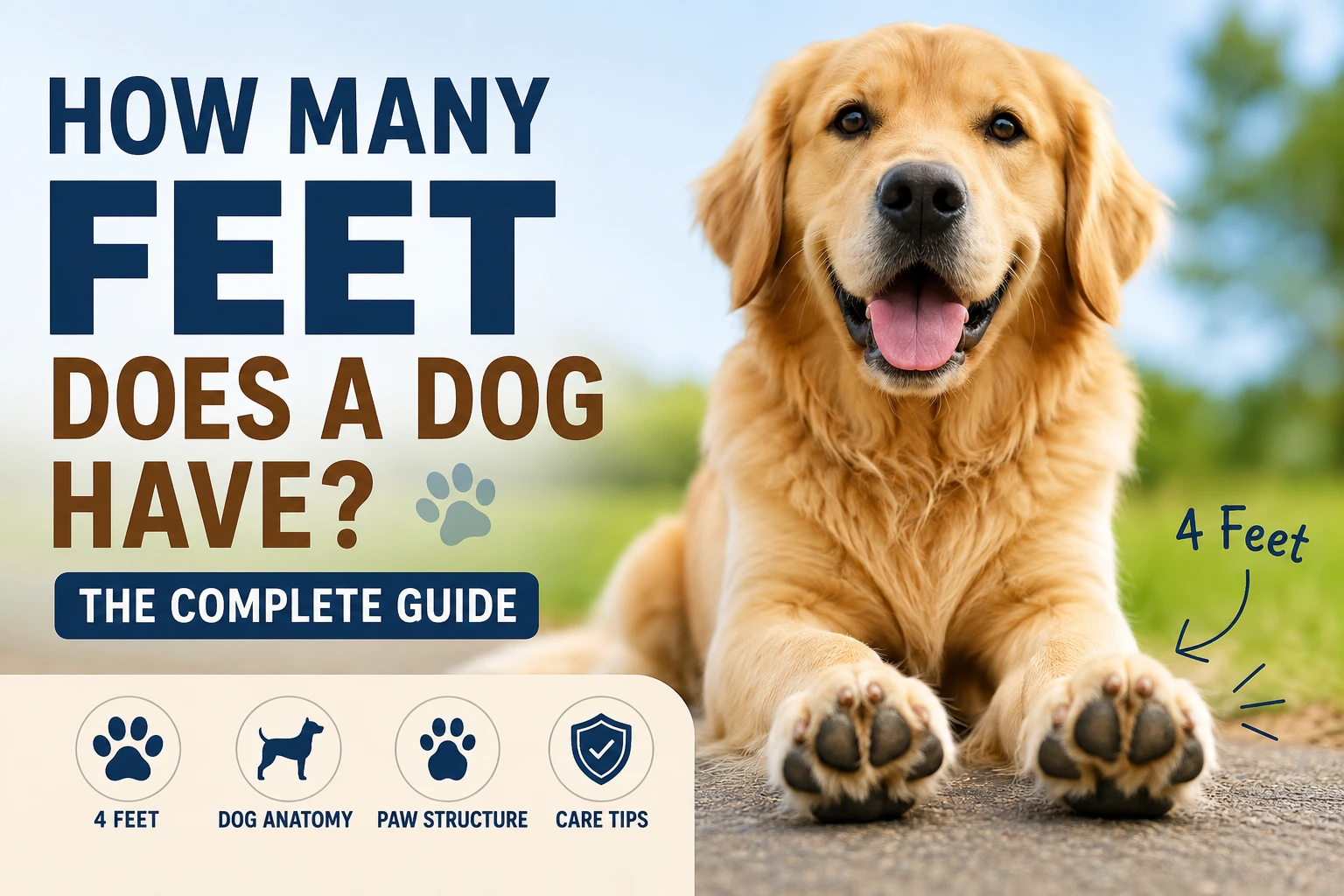
If you’ve ever looked at your pet and wondered how many feet does a dog have, the answer is simple: a dog has four feet.
Dogs are four-legged mammals, meaning they walk and run using four limbs. Each limb ends in a foot, commonly referred to as a paw. While this answer seems straightforward, dog feet are fascinating structures designed for movement, balance, traction, and protection.
In this guide, you’ll learn not only how many feet a dog has but also how dog paws work, how many toes they have, common foot problems, and interesting facts about canine anatomy.
Quick Answer: How Many Feet Does a Dog Have?
The simple answer is:
| Animal | Number of Feet |
|---|---|
| Dog | 4 |
| Cat | 4 |
| Human | 2 |
| Horse | 4 |
| Rabbit | 4 |
A healthy dog normally has:
- 4 feet
- 4 legs
- Multiple toes on each foot
- Paw pads for cushioning
- Claws for grip and stability
When people ask how many feet does a dog have, they are usually referring to the four paws attached to the dog’s legs.
Understanding Dog Anatomy
To better understand dog feet, it helps to know a little about canine anatomy.
Dogs Are Quadrupeds
Dogs belong to a group of animals called quadrupeds.
A quadruped is an animal that walks on four limbs. The word comes from Latin:
- “Quad” = four
- “Ped” = foot
Because dogs move using all four limbs, they naturally have four feet.
Examples of quadrupeds include:
- Dogs
- Cats
- Horses
- Cows
- Lions
- Wolves
How Dogs Use Their Feet
Dog feet serve many purposes beyond simply walking.
Their feet help with:
- Running
- Jumping
- Digging
- Turning quickly
- Climbing certain surfaces
- Maintaining balance
Every movement a dog makes depends heavily on healthy feet and paws.
How Many Feet Does a Dog Have Compared to Other Animals?
Comparing dogs to other animals can make the answer easier to understand.
Dogs vs Cats
Both dogs and cats have:
- Four feet
- Four legs
- Paw pads
- Claws
However, cat paws are generally more flexible and retractable.
Dogs vs Humans
Humans have:
- Two feet
- Two legs
Dogs have:
- Four feet
- Four legs
Humans walk upright, while dogs move on all fours.
Dogs vs Horses
Horses also have four feet.
The difference is that horse feet end in hooves, while dog feet end in paws with toes and claws.
Dog Feet and Paw Structure
When discussing how many feet does a dog have, it’s useful to understand what makes up each foot.
Main Components of a Dog Paw
A dog’s paw consists of:
- Toes
- Claws
- Paw pads
- Skin
- Tendons
- Ligaments
- Bones
These structures work together to support the dog’s body weight and movement.
Paw Pads
Paw pads are the thick, cushioned parts underneath the foot.
Their functions include:
- Shock absorption
- Surface grip
- Protection from rough terrain
- Temperature insulation
Paw pads help dogs comfortably walk on grass, dirt, pavement, and rocky surfaces.
Toes and Claws
Each dog foot contains several toes.
Toes help with:
- Balance
- Stability
- Direction changes
- Grip
Claws provide traction and help dogs dig or climb.
Dewclaws
Many dogs have a special toe called a dewclaw.
The dewclaw is located higher on the leg than the other toes.
Some breeds have:
- Front dewclaws only
- Front and rear dewclaws
- No dewclaws (removed or absent)
How Many Toes Does a Dog Have?
Many people asking how many feet does a dog have are also curious about toes.
Most dogs have:
| Location | Toes |
|---|---|
| Front Foot | 5 |
| Rear Foot | 4 |
This gives most dogs a total of:
18 toes
Calculation:
- 5 + 5 = 10 front toes
- 4 + 4 = 8 rear toes
- Total = 18 toes
Front Feet
The front feet usually contain:
- Four weight-bearing toes
- One dewclaw
The dewclaw does not normally touch the ground.
Rear Feet
Rear feet generally have four toes.
Some breeds may have extra rear dewclaws.
Breed Differences
Certain breeds can have additional toes.
Examples include:
- Great Pyrenees
- Beauceron
- Briard
These extra toes are often considered normal breed traits.
Why Are Dog Feet Important?
Dog feet perform many vital functions.
Balance
Feet help dogs maintain stability while standing and moving.
Without healthy feet, balance becomes difficult.
Movement
Every activity depends on the feet.
Examples include:
- Walking
- Running
- Sprinting
- Jumping
- Playing
Strong feet help dogs remain active throughout life.
Protection
Paw pads protect sensitive tissues from:
- Rough surfaces
- Heat
- Cold
- Small rocks
- Minor injuries
This natural protection allows dogs to travel across many types of terrain.
Common Dog Foot Problems
Although dogs have strong feet, they can still experience injuries and health issues.
Cracked Paw Pads
Dry weather can cause paw pads to crack.
Signs include:
- Rough texture
- Bleeding
- Limping
- Sensitivity
Pet-safe moisturizers can often help.
Injuries
Dogs may injure their feet through:
- Sharp objects
- Broken glass
- Thorns
- Hot pavement
Regular inspection helps detect injuries early.
Infections
Bacterial and fungal infections can affect paws.
Symptoms may include:
- Swelling
- Redness
- Odor
- Excessive licking
Veterinary treatment may be necessary.
How to Care for Your Dog’s Feet
Healthy feet are essential for a happy dog.
Regular Inspection
Check paws weekly for:
- Cuts
- Swelling
- Debris
- Cracked pads
Early detection can prevent serious problems.
Nail Trimming
Overgrown nails can:
- Cause pain
- Affect walking
- Increase injury risk
Trim nails regularly or seek professional grooming assistance.
Paw Protection
Protect paws by:
- Avoiding extremely hot pavement
- Using dog booties when necessary
- Cleaning paws after walks
- Keeping pads moisturized
These simple habits can improve foot health.
Fun Facts About Dog Feet
Dog feet are more interesting than many people realize.
Here are some fascinating facts:
Dogs Sweat Through Their Paws
Unlike humans, dogs do not sweat heavily through their skin.
They release small amounts of sweat through their paw pads.
Paw Prints Are Unique
Just like fingerprints in humans, every dog’s paw print has unique patterns.
No two dogs have exactly the same paw print.
Dogs Walk on Their Toes
Dogs are digitigrade animals.
This means they walk primarily on their toes rather than on the entire foot.
This structure helps increase speed and agility.
Paw Pads Help Reduce Noise
The soft texture of paw pads allows dogs to move more quietly.
This ability helped their wild ancestors hunt effectively.
Common Misconceptions About Dog Feet
Many myths surround dog paws and feet.
Myth 1: Dogs Have Hands and Feet
Dogs technically have four feet, not hands.
Their front limbs are specialized feet used for support and movement.
Myth 2: All Dogs Have the Same Number of Toes
Some breeds have extra toes or rear dewclaws.
Therefore, toe counts can vary.
Myth 3: Paw Pads Cannot Be Injured
Paw pads are tough but not indestructible.
They can be burned, cut, or cracked.
Frequently Asked Questions
1. How many feet does a dog have?
A healthy dog typically has four feet, one at the end of each leg.
2. How many paws does a dog have?
A dog has four paws, which are commonly referred to as feet.
3. How many toes does a dog have?
Most dogs have 18 toes: five on each front foot and four on each rear foot.
4. What is a dog’s foot called?
A dog’s foot is commonly called a paw.
5. Do all dogs have four feet?
Most dogs have four feet. However, injuries, birth defects, or amputations may affect the number of functioning feet.
Conclusion
So, how many feet does a dog have? The answer is simple: a dog has four feet, also known as four paws. These feet are remarkable structures that help dogs walk, run, jump, balance, and explore the world around them.
Beyond the basic answer, dog feet contain specialized paw pads, claws, toes, and sometimes dewclaws that contribute to mobility and protection. Understanding how a dog’s feet work can help owners provide better care and maintain their pet’s overall health.
Whether you’re satisfying curiosity, teaching children about animals, or learning more about canine anatomy, remembering that dogs have four feet and usually 18 toes provides a solid foundation for understanding these amazing companions.
Discover more
how many square feet per quail