

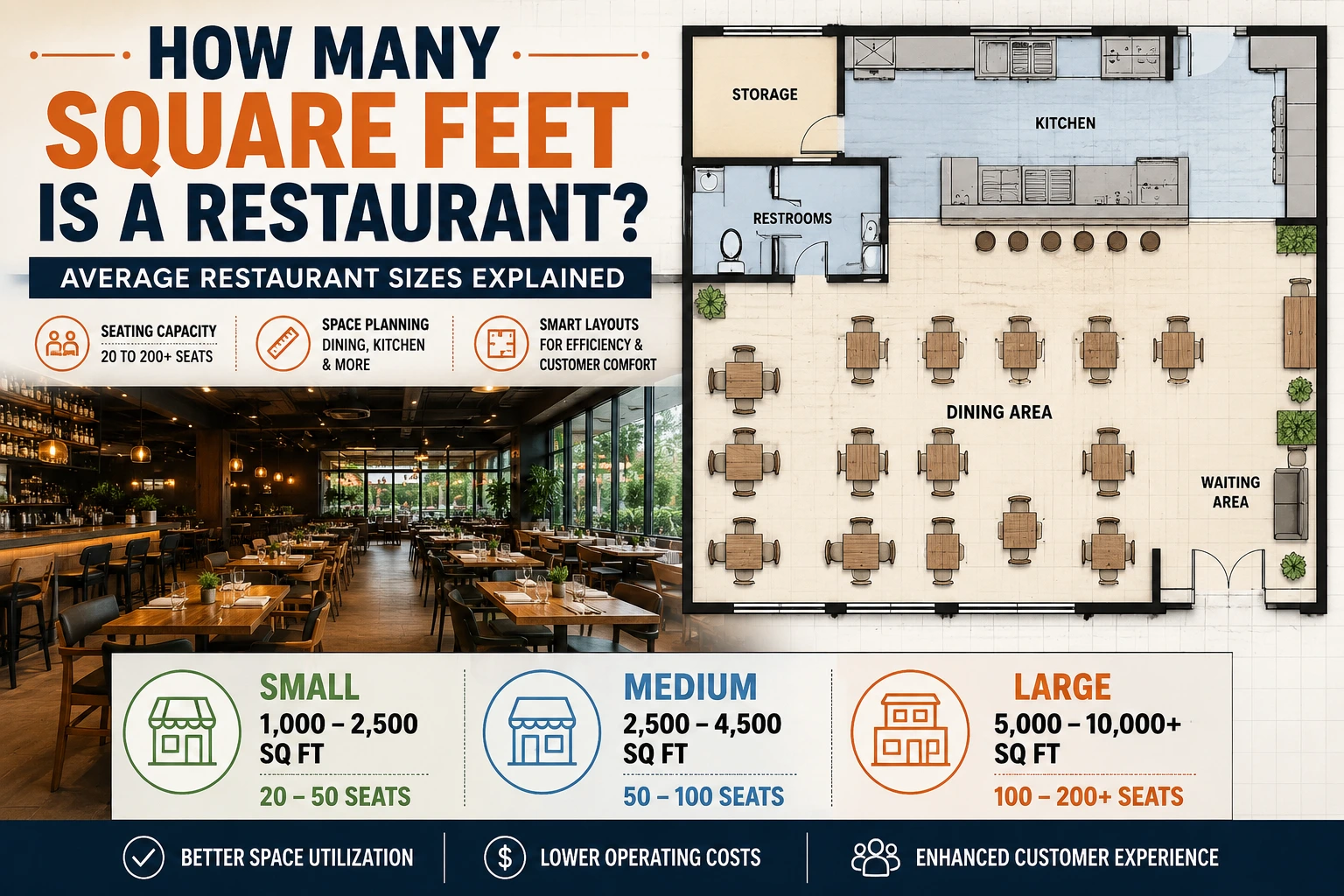
Opening a restaurant involves many important decisions, but one of the biggest is determining how much space you actually need. A common question from new restaurant owners is: how many square feet is a restaurant?
The answer depends on the type of restaurant, the number of customers you plan to serve, your kitchen requirements, and your business model. Some small cafés operate successfully in less than 1,000 square feet, while large full-service restaurants may require more than 6,000 square feet.
Understanding restaurant square footage helps you estimate rent, staffing needs, construction costs, seating capacity, and long-term profitability. In this guide, you’ll learn average restaurant sizes, industry standards, and practical examples to help you determine the ideal space for your restaurant.
Understanding Restaurant Size and Square Footage
Square footage refers to the total floor area within a restaurant. This includes:
- Dining room
- Kitchen
- Storage rooms
- Restrooms
- Employee areas
- Waiting space
- Bar areas
- Hallways and circulation space
Restaurant size is one of the most important factors affecting customer experience and operational efficiency.
A restaurant that is too small may struggle with crowding and slow service. A restaurant that is too large may create unnecessary rent and maintenance expenses.
How Many Square Feet Is a Restaurant on Average?
When people ask how many square feet is a restaurant, the average answer falls between 1,500 and 6,000 square feet.
Here is a general breakdown:
| Restaurant Type | Average Square Feet |
|---|---|
| Small Café | 500–1,500 sq ft |
| Small Restaurant | 1,000–2,500 sq ft |
| Casual Dining | 2,500–4,500 sq ft |
| Full-Service Restaurant | 3,000–6,000 sq ft |
| Large Restaurant | 5,000–10,000+ sq ft |
Most independent restaurants operate comfortably between 2,000 and 4,000 square feet.
Restaurant Size by Seating Capacity
One of the easiest ways to estimate restaurant size is by the number of seats you plan to offer.
Industry experts generally recommend 15–20 square feet per customer for the dining area, plus additional space for kitchen and support functions.
20-Seat Restaurant
A small coffee shop or sandwich café may require:
- Dining area: 300–400 sq ft
- Kitchen: 200–300 sq ft
- Storage and restroom: 200–300 sq ft
Total: Approximately 700–1,000 sq ft
50-Seat Restaurant
A typical neighborhood restaurant often needs:
- Dining room: 750–1,000 sq ft
- Kitchen: 500–800 sq ft
- Additional areas: 300–500 sq ft
Total: Approximately 1,500–2,500 sq ft
100-Seat Restaurant
A larger casual dining establishment usually requires:
- Dining room: 1,500–2,000 sq ft
- Kitchen: 800–1,200 sq ft
- Support areas: 500–800 sq ft
Total: Approximately 3,000–4,000 sq ft
200-Seat Restaurant
Large restaurants and event-focused venues may require:
- Dining room: 3,000–4,000 sq ft
- Kitchen: 1,500–2,000 sq ft
- Support facilities: 1,000+ sq ft
Total: Approximately 5,500–8,000+ sq ft
Typical Restaurant Space Allocation
Understanding how space is distributed is just as important as knowing the total square footage.
Dining Area
Most successful restaurants dedicate approximately:
60% of total space to customer-facing areas.
This includes:
- Tables
- Chairs
- Booths
- Waiting areas
- Bar seating
Kitchen
The kitchen usually occupies:
30–40% of total square footage
This space includes:
- Cooking stations
- Prep areas
- Refrigeration
- Dishwashing stations
Restaurants with extensive menus often require larger kitchens.
Storage
Storage areas are essential for:
- Dry goods
- Cleaning supplies
- Inventory
- Equipment
Storage generally accounts for:
5–10% of total space
Restrooms
Local regulations determine restroom requirements.
Most restaurants allocate:
100–300 square feet
depending on occupancy.
Waiting Areas
Popular restaurants often include:
- Reception desk
- Waiting benches
- Customer flow pathways
These areas improve customer experience during busy periods.
Average Restaurant Size Comparison Table
| Restaurant Concept | Typical Size |
|---|---|
| Coffee Shop | 500–1,500 sq ft |
| Fast Food Restaurant | 1,000–2,500 sq ft |
| Pizza Restaurant | 1,500–3,000 sq ft |
| Casual Dining | 2,500–4,500 sq ft |
| Family Restaurant | 3,000–5,000 sq ft |
| Fine Dining Restaurant | 3,500–6,000 sq ft |
| Buffet Restaurant | 5,000–10,000 sq ft |
| Banquet Restaurant | 8,000–20,000+ sq ft |
Factors That Affect Restaurant Square Footage
There is no universal answer to how many square feet is a restaurant because every concept has different requirements.
Restaurant Concept
The type of restaurant significantly influences space needs.
Examples:
- Coffee shops require less space.
- Fine dining restaurants need wider table spacing.
- Buffets require serving stations.
- Sports bars need additional seating and entertainment areas.
Menu Complexity
Restaurants with extensive menus generally need:
- Larger kitchens
- More refrigeration
- Additional prep stations
A burger restaurant may need far less space than a seafood restaurant with dozens of menu items.
Location
Urban restaurants often operate in smaller footprints due to higher rent costs.
Suburban locations may allow larger dining rooms and parking areas.
Building Regulations
Local building codes affect:
- Occupancy limits
- Fire exits
- ADA accessibility
- Restroom requirements
These regulations can increase required square footage.
How to Calculate Restaurant Space Requirements
If you are planning a new restaurant, use this simple method.
Step 1: Determine Seating Capacity
Start with your expected number of guests.
Example:
- Planned seating = 80 customers
Step 2: Estimate Dining Space
Multiply seats by 15–20 square feet.
80 seats × 18 sq ft = 1,440 sq ft
Step 3: Add Kitchen and Support Areas
If dining space represents 60% of total area:
1,440 ÷ 0.60 = 2,400 sq ft
Estimated total restaurant size:
Approximately 2,400 square feet
This method provides a practical starting point for planning.
Real-World Restaurant Examples
Small Neighborhood Café
- Seating: 25
- Total area: 900 sq ft
- Limited menu
- Counter service
Ideal for coffee shops and bakeries.
Casual Family Restaurant
- Seating: 90
- Total area: 3,500 sq ft
- Full kitchen
- Table service
Common in suburban shopping centers.
Fine Dining Establishment
- Seating: 120
- Total area: 5,500 sq ft
- Large kitchen
- Private dining rooms
Designed to provide a premium guest experience.
Buffet Restaurant
- Seating: 250
- Total area: 10,000+ sq ft
- Food stations
- Larger circulation areas
Requires significantly more space than traditional restaurants.
Common Mistakes When Choosing Restaurant Size
Many restaurant owners make costly space-planning mistakes.
Renting Too Much Space
Large spaces mean:
- Higher rent
- More utility costs
- Increased maintenance
Unused space reduces profitability.
Choosing a Space That’s Too Small
A cramped restaurant can lead to:
- Poor customer experience
- Kitchen congestion
- Limited revenue potential
Growth becomes difficult.
Ignoring Customer Flow
Poor layouts can create:
- Long wait times
- Traffic bottlenecks
- Service delays
Proper planning improves efficiency.
Underestimating Storage Needs
Many new owners forget about:
- Inventory storage
- Cleaning equipment
- Seasonal supplies
Insufficient storage often creates operational challenges.
Expert Tips for Planning Restaurant Space
Industry professionals recommend the following:
Prioritize Functionality
Design for smooth movement between:
- Kitchen
- Dining area
- Service stations
Efficiency directly impacts profitability.
Leave Room for Growth
If possible, choose a location that allows future expansion.
This provides flexibility as customer demand increases.
Optimize Table Layout
Avoid overcrowding.
Customers value comfort and privacy.
Well-spaced seating often leads to better reviews and repeat visits.
Balance Front and Back of House
A common industry guideline is:
- 60% Front of House
- 40% Back of House
This balance supports efficient operations.
Frequently Asked Questions
1. How many square feet is a restaurant per person?
Most restaurants allocate between 15 and 20 square feet per customer in the dining area.
2. What is the average size of a small restaurant?
A small restaurant typically ranges from 1,000 to 2,500 square feet.
3. How much space does a 100-seat restaurant need?
Most 100-seat restaurants require approximately 3,000 to 4,000 square feet.
4. What percentage of a restaurant should be kitchen space?
Many restaurants dedicate 30% to 40% of total square footage to kitchen operations.
5. Can a restaurant operate in less than 1,000 square feet?
Yes. Coffee shops, bakeries, and quick-service concepts can operate successfully in 500–1,000 square feet.
Conclusion
If you’re wondering how many square feet is a restaurant, the answer depends on your concept, seating capacity, and operational requirements. While most restaurants fall between 1,500 and 6,000 square feet, smaller cafés can operate in under 1,000 square feet, and large full-service venues may exceed 10,000 square feet.
The key is balancing customer comfort, kitchen efficiency, storage needs, and future growth. By understanding average restaurant sizes and using proven space-planning guidelines, you can choose the right location and create a restaurant that operates efficiently while maximizing profitability.
Discover more