

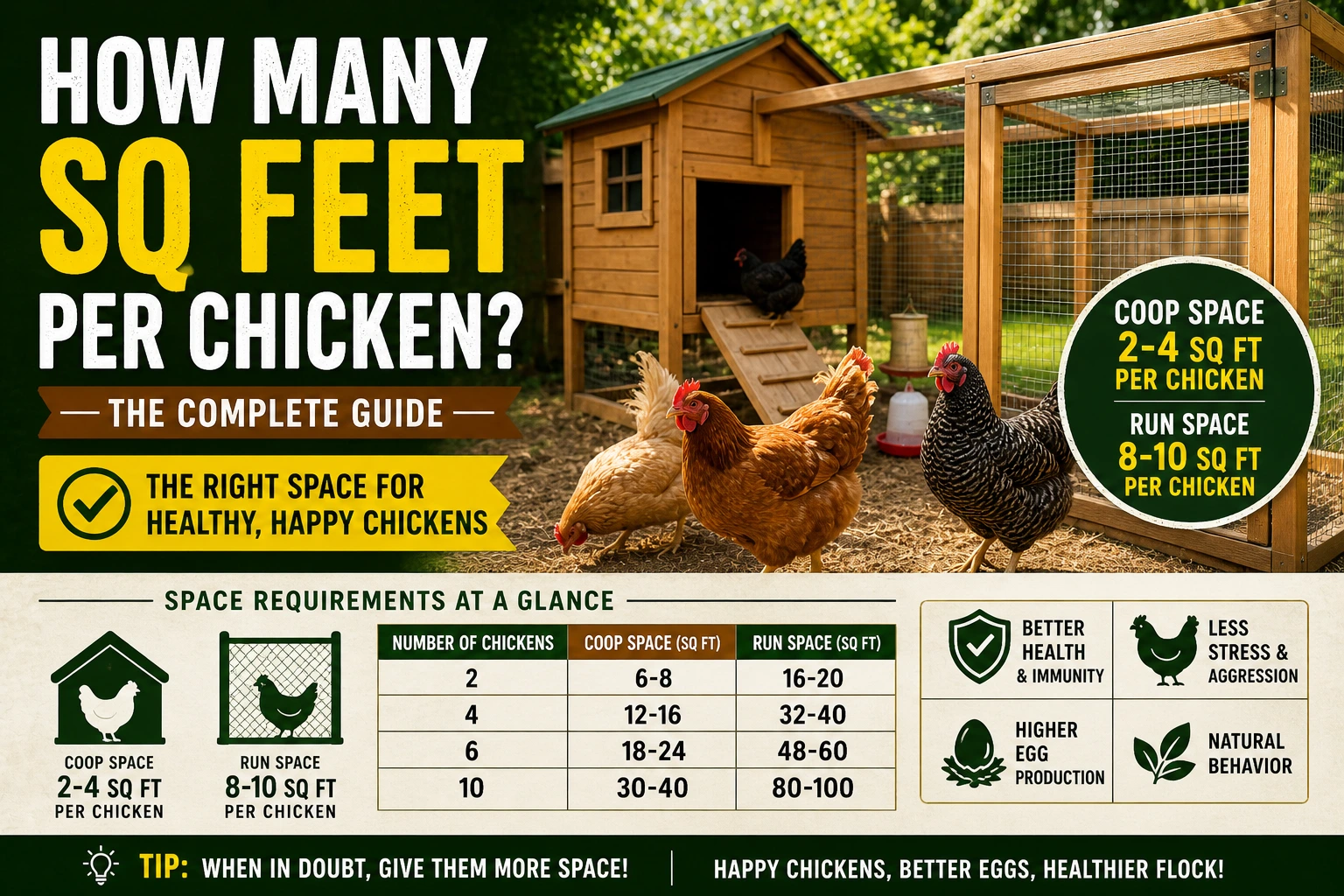
If you are wondering how many sq feet per chicken, the general rule is simple. Each chicken needs about 2 to 4 square feet inside the coop and 8 to 10 square feet in an outdoor run.
This is the standard recommendation for backyard chickens. However, giving more space is always better because it improves health, reduces stress, and increases egg production.
Why Space Matters for Chickens
Providing the right amount of space is not just about comfort. It directly affects the overall health and behavior of your flock.
Health Benefits
When chickens have enough space
- They stay cleaner
- There is less risk of disease
- Air circulation improves
Crowded conditions can lead to infections, parasites, and poor hygiene.
Behavior and Stress
Chickens need room to move, scratch, and explore.
If they are overcrowded
- They may become aggressive
- Pecking and bullying increase
- Egg production may drop
Proper spacing helps maintain a peaceful flock.
Standard Space Requirements for Chickens
Coop Space Per Chicken
Inside the coop, chickens mainly sleep and lay eggs.
Recommended space
- Minimum: 2 square feet per chicken
- Ideal: 3 to 4 square feet per chicken
More space means less stress and better hygiene.
Run Space Per Chicken
The run is where chickens spend most of their active time.
Recommended space
- Minimum: 8 square feet per chicken
- Ideal: 10 square feet or more
This allows chickens to move freely and behave naturally.
Chicken Space Chart
Here is a simple chart to help you plan
| Number of Chickens | Coop Space | Run Space |
|---|---|---|
| 2 | 6–8 sq ft | 16–20 sq ft |
| 4 | 12–16 sq ft | 32–40 sq ft |
| 6 | 18–24 sq ft | 48–60 sq ft |
| 10 | 30–40 sq ft | 80–100 sq ft |
This chart gives a practical idea of how much space you need.
Factors That Affect Space Requirements
Not all chickens need the same amount of space. Several factors can change the requirement.
Breed Size
Different breeds vary in size.
- Small breeds need less space
- Large breeds need more room
For example, heavy chickens require extra space to move comfortably.
Climate
Weather conditions also matter.
- In cold climates, chickens stay inside more
- This increases the need for larger coop space
In warmer climates, outdoor space becomes more important.
Free Range vs Confined
If chickens are free-range
- They need less run space
- They get exercise outside
If confined
- You must provide larger runs
Age of Chickens
Chicks need less space, but as they grow, their space requirements increase.
Always plan for adult size.
Coop vs Run Understanding the Difference
The coop and run serve different purposes.
Coop
- Sleeping area
- Egg laying space
- Protection from weather
Run
- Exercise area
- Feeding and scratching
- Sunlight exposure
Both areas must be sized properly for a healthy flock.
Real World Examples
Example 1
A backyard owner with 5 chickens
- Coop: 15 to 20 sq ft
- Run: 40 to 50 sq ft
Example 2
Small farm with 10 chickens
- Coop: 30 to 40 sq ft
- Run: 80 to 100 sq ft
Example 3
Free-range setup
- Smaller coop needed
- Large open outdoor area replaces run
These examples show how space planning works in real situations.
Benefits of Giving More Space
Providing extra space has clear advantages
- Healthier chickens
- Higher egg production
- Less aggression
- Cleaner environment
- Easier maintenance
More space leads to happier chickens.
Common Mistakes to Avoid
Many beginners make these mistakes
- Overcrowding chickens
- Ignoring breed size
- Not planning for growth
- Building a coop that is too small
- Forgetting ventilation
Avoiding these mistakes saves time and money.
Expert Tips for Designing Chicken Space
Follow these tips for better results
- Always plan for more chickens than you start with
- Add perches and nesting boxes
- Ensure proper ventilation
- Keep the coop dry and clean
- Provide shade in the run
Designing properly from the start prevents future problems.
FAQs
How many sq feet per chicken is ideal
Each chicken needs 2 to 4 sq ft in the coop and 8 to 10 sq ft in the run.
Can chickens live in small spaces
Yes, but overcrowding causes stress, disease, and reduced egg production.
Is free range better for chickens
Yes, it allows natural behavior and reduces space requirements in the run.
How much coop space do 6 chickens need
They need about 18 to 24 square feet inside the coop.
What happens if chickens are overcrowded
They may become aggressive, unhealthy, and produce fewer eggs.
Conclusion
Now you clearly understand how many sq feet per chicken. The standard guideline is 2 to 4 square feet inside the coop and 8 to 10 square feet in the run for each chicken.
However, giving more space always leads to better results. It improves health, reduces stress, and increases productivity. By planning properly and considering factors like breed, climate, and setup, you can create a comfortable environment for your chickens.
With the right space and care, your chickens will stay happy, healthy, and productive for years.
how many feet in an acre for a house