
Manufactured homes have come a long way, offering a stylish, modern, and affordable path to homeownership. If you’ve ever toured a modern single-section home, you know they can feel surprisingly spacious. It’s no wonder many prospective buyers find themselves asking: just how many square feet is a 16×70 mobile home? Getting this number right is the crucial first step in understanding if this popular dimension is the perfect fit for your lifestyle and budget. Whether you’re a first-time homebuyer or looking to downsize to an efficient, elegant space, this guide will provide the exact calculation and crucial context on what that living area really feels like.
Calculating the Precise Square Footage of a 16×70 Mobile Home
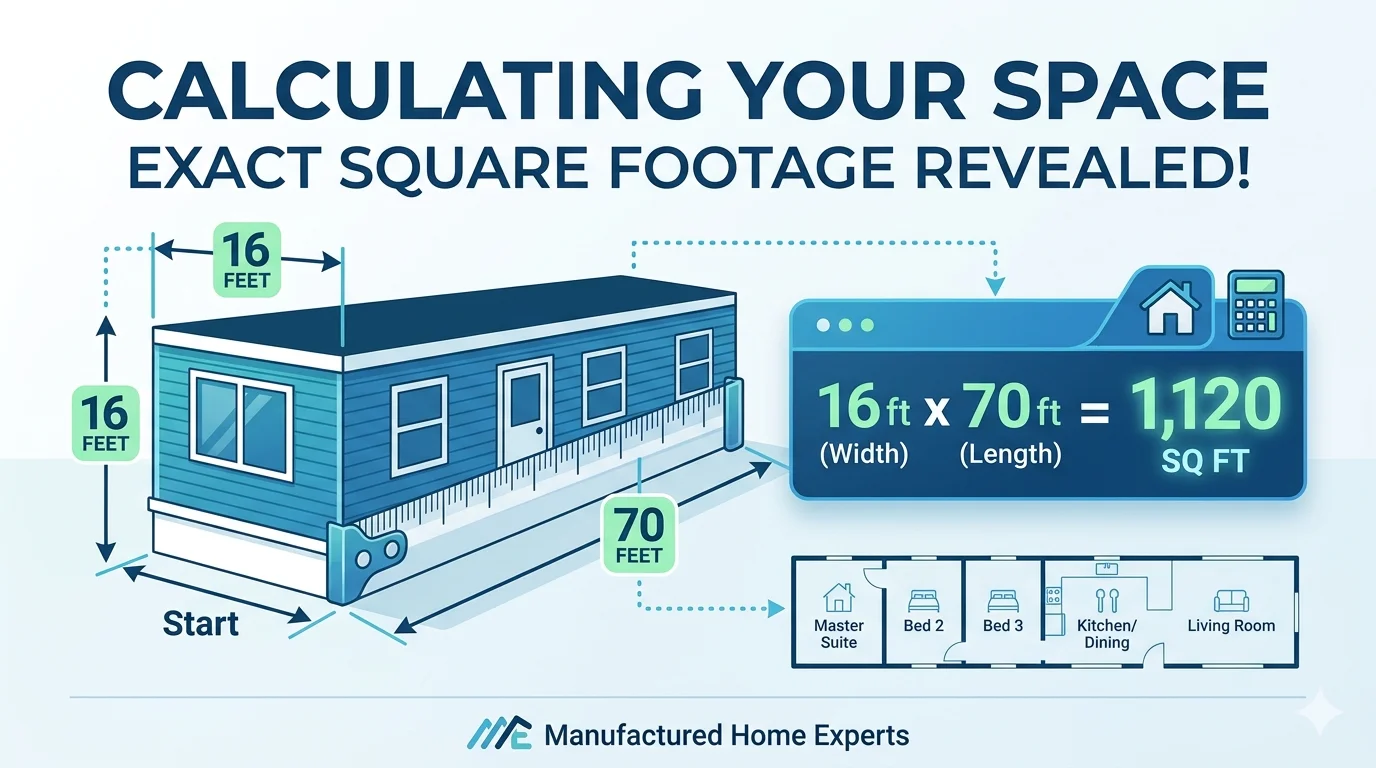
To answer this primary question with technical accuracy, we have to go back to basic math. The “16” and “70” represent the exterior dimensions of the home’s shell in feet—its width and length.
Calculating the total floor area is a straightforward geometric multiplication:
Square Footage = Length × Width
For this specific mobile home size, the calculation is:
16 feet × 70 feet = 1,120 square feet.
This is the key number to remember. A standard 16×70 single-wide (often referred to as a single-section home) provides 1,120 square feet of potential living space. This exact figure serves as the baseline for appraisals, tax calculations, and a fundamental measurement of the home’s value and capacity.
A Note on Terminology and How It Affects Measurements
Before we dive deeper into visualizing that space, it’s worth a brief detour into terminology. While people still use the term “mobile home” in everyday conversation, the official and correct industry term for any factory-built home constructed since June 15, 1976, is a “manufactured home.” On this date, the stringent federal HUD Code (U.S. Department of Housing and Urban Development) went into effect, establishing standards for design, construction, durability, transportability, and safety.
This distinction is important because the calculation of 1,120 square feet is based on the exterior shell dimensions defined by these modern, high-quality standards. Older homes built before 1976 might have different wall thicknesses or construction methods that could slightly affect the usable interior space, even if the exterior box measurements are similar. In this article, when we refer to a “16×70 mobile home,” we are speaking of a modern, HUD-regulated single-section manufactured home.
Visualizing the Space: Layouts and Liveability of 1,120 Square Feet
Numbers alone don’t build a clear picture. So, what does a 1,120-square-foot home really offer? It’s easy to visualize smaller single-wides as being cramped, but a 16-foot-wide model is surprisingly generous. In fact, 16×70 is a very healthy size for a single-wide mobile home, maximizing the space within a single transportable section.
So, how is this 1,120 sq ft typically used? Modern manufactured home floor plans are highly efficient, designed to minimize “dead space” like long, dark hallways.
- Bedroom and Bathroom Count: This size easily and comfortably accommodates a 3-bedroom, 2-bathroom layout. This makes it a great option for a small family or for anyone needing a home office or guest room.
- The Master Suite: You can almost always expect a well-proportioned master suite. The best layouts will include a primary bedroom that can hold a queen (sometimes even a king) bed, a walk-in closet, and an attached en-suite bathroom.
- Open-Concept Living: Many floor plans leverage the home’s width to create a stunning, spacious open-concept living area. The living room, dining space, and kitchen often flow seamlessly into one another, creating a bright, airy feeling that belies the home’s single-section nature.
- A “Real” Kitchen: Forget a tiny galley—the kitchen in a 16×70 can be a true hub of the home, often featuring full-sized appliances, a built-in kitchen island, and ample counter and cabinet space.
A good way to visualize 1,120 square feet is to compare it to a relatable space. It is slightly larger than a typical two-car garage (which is around 400-500 square feet). It’s closer in size to many cozy mid-century ranch houses or spacious luxury apartments.
Key Factors Affecting Your Useable Living Space
While 1,120 square feet is the official exterior measurement, there are a few practical factors that can slightly impact the amount of actual usable square footage inside the home.
- Wall Thickness: The measurement is from the outer wall surface. All that sturdy framing, insulation, and drywall (as well as exterior siding) takes up space. The functional interior floor area will be slightly less than the calculated exterior.
- Hitch and Transport Hardware: As detailed in the FAQ section, the frame’s hitch and tongue are essential for transporting the home but are not included in the living square footage. This hardware is often removed after the home is set on its foundation.
- Built-Ins and Infrastructure: Plumbing chases, mechanical systems (like your water heater and furnace), and built-in cabinetry, while essential, occupy parts of that total square footage.
- The Power of Additions: The best way to expand your functional space isn’t inside the home but on its perimeter. Site-built additions, while not counted in the manufactured home’s primary square footage, dramatically change how you live. Think of it: a screened-in porch, a large deck, a site-built garage, or an added “Arizona room” can all make a 1,120-square-foot home feel like a much larger, more integrated residential space.
Why Knowing the 1,120 Square Feet Matters: Purchasing and Pricing
Understanding the exact square footage is a powerful tool for buyers. For one, it allows you to get a clear picture of the cost per square foot for the home.
Generally speaking, manufactured homes offer a significant value proposition over site-built homes. You are typically looking at a lower initial cost, which translates to a lower cost per square foot. According to data from organizations like the U.S. Census Bureau and the Manufactured Housing Institute, the average price of a manufactured home, including the land, can be anywhere from 30% to 50% less than the cost of a similar site-built single-family home.
This lower price point opens up homeownership to many who might be otherwise priced out of the market. Knowing that you get 1,120 square feet for a fraction of the cost makes the 16×70 single-wide an exceptionally attractive option.
Square footage is also a key figure for appraisers, who use it to determine the home’s fair market value. This valuation is crucial when you are applying for a loan, refinancing, or selling your home. Finally, and often of great practical interest, in many jurisdictions, your property tax assessment on the home itself will be directly linked to its official square footage.
Debating the 1,120 Square Foot Lifestyle: Benefits and Drawbacks
Is a 1,120-square-foot space the right one for you? There are compelling arguments on both sides.
Benefits:
- Affordability: This is almost always the number one reason. A 16×70 mobile home provides a comfortable living space for a price that is difficult to find elsewhere, making homeownership far more accessible.
- Efficiency: Smaller, modern homes are often cheaper to heat and cool. The compact design of a single-wide is inherently more energy-efficient than larger, multi-section homes.
- Easier Maintenance: Simply put, there is less of everything—less roof, less siding, fewer square feet of flooring—to clean, repair, and replace. This is a massive draw for busy individuals or retirees looking to minimize their chore list.
- The “Right-Sized” Feel: For many individuals, couples, or small families, 1,120 square feet is the goldilocks zone—offering separate spaces and comfort without the excess and clutter of a large, high-maintenance house.
Drawbacks:
- The “Linear” Layout: By definition, a single-wide home must be transported in a linear fashion. This means the layout can sometimes feel longer and narrower than in a double-wide, with rooms often arranged in a “shotgun” or long-hallway pattern.
- Narrower Rooms: You won’t get the massive, open-concept “great rooms” that you find in larger double-wide models. Every room is designed within that 16-foot width, which can feel limiting for certain furniture arrangements.
- Potential Community Restrictions: In some manufactured home communities, there may be minimum size requirements that could exclude a single-wide, even a substantial one like a 16×70. This is important to check if you have a specific park in mind.
Size Matters: A Comparison Table of Common Manufactured Home Dimensions
The manufactured housing industry uses several standard sizes. Seeing the 1,120-square-foot total of a 16×70 in context can help you decide if it’s the sweet spot for your needs.
| Standard Home Dimension | Home Type | Total Square Feet |
| 14×60 | Single-Wide | 840 sq ft |
| 16×70 | Single-Wide | 1,120 sq ft |
| 16×80 | Single-Wide | 1,280 sq ft |
| 24×48 | Double-Wide | 1,152 sq ft |
| 28×60 | Double-Wide | 1,680 sq ft |
| 32×70 | Double-Wide | 2,240 sq ft |
This comparison table highlights an important and often overlooked point: A large, modern single-wide like the 16×70 can have more square footage than some smaller double-wide homes (like the 24×48)! This is why looking at the number and not just the type is so critical when shopping.
Miscalculations and Assumptions: Avoid These Pitfalls
In the excitement of looking at homes, it’s easy to make a few common calculation errors or assumptions. Be on the lookout for these:
- Ignoring the Hitch: This is a big one. As we’ve emphasized, the total length of the unit includes the tow hitch and frame, which can add up to 6 to 10 feet to the overall footprint. Never mistake the total length for the livable length. The 70 feet in “16×70” refers to the box length of the home itself.
- Confusing Living Space with Total Footprint: Your living square footage is the space inside the home’s walls. It is different from the total area of the lot or the combined footprint of the home and any site-built additions (like a garage). Understand this distinction for realistic planning.
Finding the Perfect Layout for Your 1,120 Square Foot Home
While the square footage of every 16×70 mobile home is the same (1,120 sq ft), the feel of that space can vary dramatically based on the floor plan. Here are some key tips for selecting the right layout:
- Prioritize What You Use: Think about your lifestyle. Is an open-concept kitchen with a large island and eating space more important to you than a slightly larger third bedroom? Would you prefer a massive master suite at the expense of a second bathroom or the common area? Manufacturers offer dozens of diverse floor plans, so you can choose one that aligns with your priorities.
- Prioritize Built-In Storage: In any single-wide, storage is your best friend. Look for layouts that maximize every inch, featuring built-in pantries, cabinetry, linen closets, and extensive closet space in the bedrooms.
- Check the Bathroom Access: Consider the placement of the second bathroom. If you expect to entertain often, you might prefer a floor plan where it’s accessible from the main living area, rather than being an en-suite to the second bedroom.
Knowing the answer to “how many square feet is a 16×70 mobile home?” gives you more than just a number. It gives you a key, empowering you to make a deeply informed decision. Understanding that a 16×70 provides precisely 1,120 square feet is your starting line. From there, you can explore the diverse floor plans and high-quality finishes that the modern manufactured housing industry offers. By understanding this calculation and the factors surrounding it, you can move forward confidently, finding a home that perfectly balances space, style, and budget to create the ideal backdrop for your life.
Frequently Asked Questions (FAQs)
1. Does the calculated square footage of a 16×70 mobile home include the hitch?
No, the official calculated square footage of 1,120 square feet for a 16×70 mobile home does not include the hitch. The number is based on the exterior dimensions of the home’s actual box or body. The hitch is a heavy-duty steel frame used for transporting the home and typically extends several feet past the end of the unit. This hardware is not livable space and is often removed once the home is permanently set.
2. Is 1,120 square feet enough for a family?
Yes, 1,120 square feet can comfortably and practically house a small family. It easily accommodates a 3-bedroom, 2-bathroom layout, which is a standard and popular configuration for a family. Modern manufactured home floor plans are highly efficient, using an open-concept living, dining, and kitchen area to maximize the feeling of spaciousness.
3. How does the price per square foot of a manufactured home compare to a stick-built home?
In almost every market, the price per square foot for a manufactured home is significantly lower than that of a traditional site-built (or “stick-built”) home. You are often getting a modern, high-quality living space at a fraction of the initial cost of a similar-sized site-built home, which is a key part of what makes manufactured housing such an attractive option for many homeowners.
4. Can I find a 4-bedroom 16×70 mobile home layout?
While a 1,120-square-foot (16×70) home can theoretically be configured with 4 bedrooms, it is less common for this specific size. Most standard floor plans for a 16×70 single-wide focus on providing a comfortable 3-bedroom, 2-bathroom layout, ensuring the living and dining areas feel open and the master suite remains spacious. A 4-bedroom configuration is much more standard and easier to find in a larger single-wide (like a 16×80) or in a multi-section double-wide home.
5. Do single-wide mobile homes have less square footage than smaller double-wides?
This is a very common misconception, but the answer is no! As you can see from our comparison table, a large single-wide home like the 16×70 (at 1,120 square feet) can actually have a higher total square footage than some smaller double-wide homes (such as a 24×48, which totals 1,152 square feet—just a hair more than the 16×70). When it comes to finding the right home, the total number of square feet is far more important than whether it is a single-wide or double-wide configuration.
Discover More:
112 Inches Is How Many Feet? Complete Guide