
If you’re planning a new home, upgrading your property, or simply trying to understand space requirements, you’ve likely asked: how many square feet is a standard two-car garage?
This is more than just a simple measurement question. The size of your garage affects how easily you can park your vehicles, how much storage you have, and even your home’s overall functionality and value.
In this complete guide, you’ll not only get the exact answer but also understand dimensions, layout options, real-life use cases, and expert tips to help you choose the ideal garage size.
Quick Answer: Standard Two-Car Garage Size
A standard two-car garage is typically:
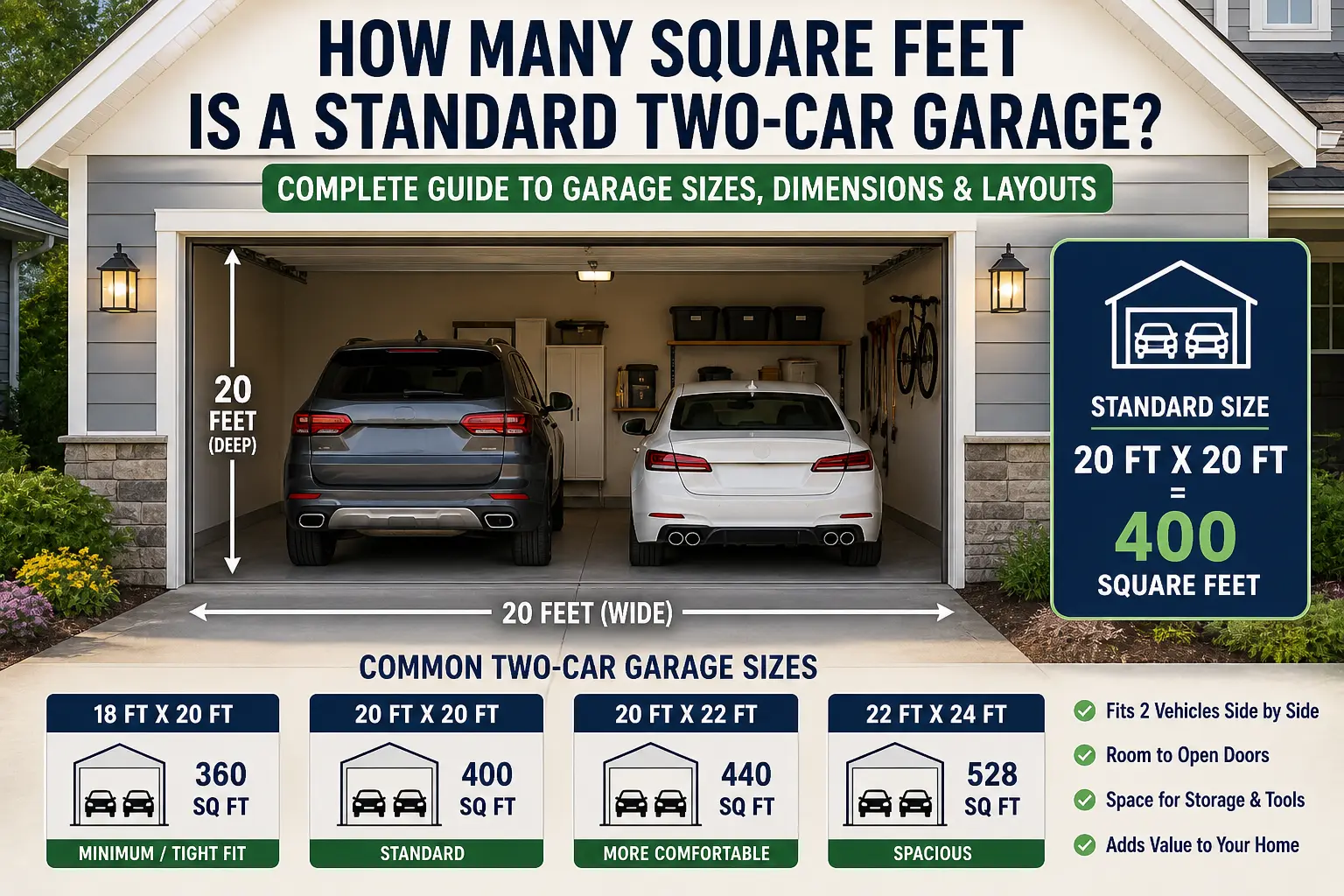
- 20 feet × 20 feet = 400 square feet
However, this is just the most common size. In reality, two-car garages come in a range of dimensions depending on comfort and usage needs:
- 18 × 20 ft = 360 sq ft (minimum / tight fit)
- 20 × 20 ft = 400 sq ft (standard)
- 20 × 22 ft = 440 sq ft (more comfortable)
- 22 × 24 ft = 528 sq ft (spacious)
So, if you’re asking how many square feet is a standard two-car garage, the practical range is:
360 to 528 square feet, with 400 sq ft being the most common standard.
What Is a Standard Two-Car Garage?
Definition
A standard two-car garage is designed to accommodate two vehicles parked side by side. It includes enough space for:
- Opening car doors
- Walking around vehicles
- Basic storage in some cases
Why Standard Sizes Matter
Standard garage sizes are not random. They are based on practical needs and industry norms. Choosing a standard size helps with:
- Easier construction planning
- Lower material and labor costs
- Better resale appeal
- Compatibility with most vehicles
Builders and architects rely on these dimensions to ensure garages are functional and cost-efficient.
Typical Dimensions of a Two-Car Garage
To understand square footage better, you need to break down the dimensions.
Width
The width determines how easily two cars can fit side by side and how much space you have to open doors.
- Minimum width: 18 feet
- Standard width: 20–22 feet
- Comfortable width: 24 feet
If you own larger vehicles like SUVs, a wider garage makes a big difference.
Depth
Depth is the distance from the garage door to the back wall.
- Minimum depth: 20 feet
- Ideal depth: 22–24 feet
A deeper garage allows for storage shelves or tools behind the vehicles.
Height
Height matters if you plan to store items vertically or use taller vehicles.
- Standard ceiling height: 7–8 feet
- Garage door height: 7 feet
For trucks or overhead storage, you may need more height.
Square Footage Breakdown of Common Garage Sizes
Here’s a clear comparison to help you visualize:
| Dimensions (ft) | Square Feet | Comfort Level |
|---|---|---|
| 18 × 20 | 360 sq ft | Tight |
| 20 × 20 | 400 sq ft | Standard |
| 20 × 22 | 440 sq ft | Comfortable |
| 22 × 24 | 528 sq ft | Spacious |
| 24 × 24 | 576 sq ft | Extra large |
This table shows how small changes in dimensions can significantly increase usable space.
Standard vs Oversized Two-Car Garages
Not all garages are created equal. Some homeowners choose to go beyond the standard size.
Standard Garage
- Around 400 sq ft
- Designed mainly for parking two vehicles
- Limited room for storage
Oversized Garage
- 500–600+ sq ft
- Extra room for tools, bikes, or a workbench
- Better for multi-purpose use
Which One Is Better?
It depends on your needs:
- If you only need parking → Standard is enough
- If you need storage or workspace → Go oversized
Spending a little more on space can improve usability long-term.
Minimum Size for a Two-Car Garage
If you’re working with limited land or budget, you may consider the minimum size.
Minimum Recommended Size
- 18 × 20 ft (360 sq ft)
While this technically fits two cars, it comes with limitations:
- Very tight parking
- Limited door opening space
- Almost no storage room
That’s why experts often suggest going with at least:
20 × 20 ft (400 sq ft) for better comfort.
Real-Life Examples of Two-Car Garage Layouts
Understanding layouts can help you visualize the space better.
Example 1: Compact Layout
- Size: 18 × 20 ft
- Vehicles: 2 small cars
- Storage: Very limited
Best for small homes or tight budgets.
Example 2: Standard Layout
- Size: 20 × 20 ft
- Vehicles: 2 sedans or compact SUVs
- Storage: Basic shelves on walls
This is the most common setup.
Example 3: Spacious Layout
- Size: 22 × 24 ft
- Vehicles: 2 large vehicles
- Extras: Workbench, bikes, storage cabinets
Ideal for families or hobbyists.
How to Calculate Garage Square Footage
If you’re designing or evaluating a garage, knowing how to calculate square footage is essential.
Formula
Square Feet = Length × Width
Example 1
Garage size: 20 × 20 ft
20 × 20 = 400 sq ft
Example 2
Garage size: 22 × 24 ft
22 × 24 = 528 sq ft
This simple formula works for any rectangular space.
What Can Fit in a Standard Two-Car Garage?
A standard garage is more versatile than many people think.
Vehicles
- 2 mid-size cars
- 2 SUVs (slightly tight)
Storage
- Wall-mounted shelves
- Tool racks
- Lawn equipment
Extra Uses
- Small DIY workspace
- Bicycle storage
- Home gym corner
However, space can quickly run out if not planned properly.
Benefits and Limitations of Standard Garage Sizes
Benefits
- Cost-effective to build
- Fits most residential designs
- Meets standard building practices
- Suitable for average households
Limitations
- Limited storage capacity
- Tight for large vehicles
- Not ideal for workshops or heavy equipment
Understanding both sides helps you make a smarter decision.
Expert Tips for Choosing the Right Garage Size
Choosing the right garage size requires planning ahead.
1. Think About Your Vehicles
Modern vehicles are larger than older models. Always check dimensions before deciding.
2. Plan for Storage
Even if you don’t need storage now, you likely will in the future.
Add at least 2–4 extra feet if possible.
3. Allow Clearance Space
For comfort, ensure:
- 2–3 feet between vehicles
- Space on both sides to open doors
4. Consider Garage Door Size
- Standard double door: 16 feet wide
- Recommended upgrade: 18 feet wide
This makes parking easier.
5. Think Long-Term
Your needs may grow over time. A slightly larger garage can save future renovation costs.
Common Mistakes to Avoid
Many homeowners regret their garage size due to simple mistakes.
1. Choosing the Smallest Option
This leads to frustration every day when parking.
2. Ignoring Storage Needs
Garages often double as storage areas.
3. Not Considering Vehicle Growth
Future vehicles may be larger.
4. Poor Layout Planning
Even a large garage can feel cramped if poorly organized.
5. Skipping Future Planning
Always think about resale value and long-term use.
FAQs
1. How many square feet is a standard two-car garage?
A standard two-car garage is typically around 400 square feet, but it can range from 360 to 528 sq ft.
2. What is the most common size for a two-car garage?
The most common size is 20 × 20 feet, which equals 400 square feet.
3. Is 18 × 20 big enough for two cars?
Yes, but it will be tight, especially for SUVs or larger vehicles.
4. What is the ideal size for a comfortable two-car garage?
A comfortable size is 22 × 24 feet (528 sq ft), offering extra space for movement and storage.
5. Can a two-car garage include storage space?
Yes, but you’ll need a slightly larger size, such as 22 × 24 ft or more, for comfortable storage.
Conclusion
So, how many square feet is a standard two-car garage?
The simple answer is:
Around 400 square feet (20 × 20 ft)
However, depending on your needs, most garages range between 360 and 528 square feet.
While a standard size works for basic parking, choosing a slightly larger garage can make a big difference in comfort, storage, and long-term usability.
Take time to evaluate your current and future needs. A well-planned garage is not just a parking space—it’s a valuable extension of your home.
Discover More: