
A barrel stove is one of the most affordable ways to heat a workshop, garage, cabin, shed, or other outdoor structure. Many people who build or buy one ask the same question: how many square feet will a barrel stove heat?
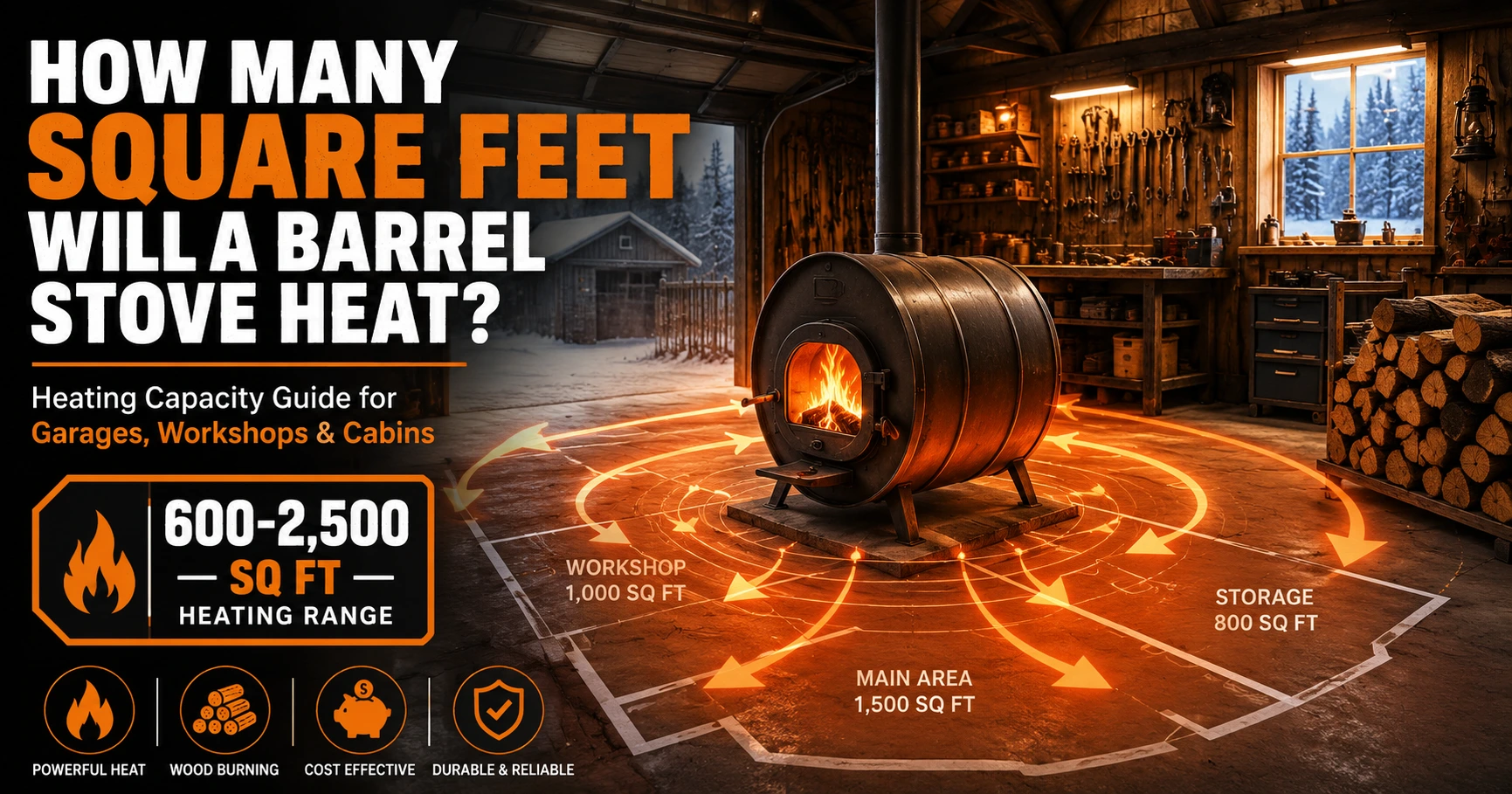
The answer depends on several factors, including stove design, insulation, climate, ceiling height, and the type of wood being burned. In general, a properly installed barrel stove can heat anywhere from 600 to 2,500 square feet, depending on whether it is a single-barrel or double-barrel setup.
Understanding the heating capacity of a barrel stove helps you choose the right size and avoid underheating or overheating your space. This guide explains everything you need to know.
What Is a Barrel Stove?
A barrel stove is a wood-burning heater made from a steel drum, usually a 55-gallon barrel. Special barrel stove kits allow users to convert a metal drum into a functioning wood stove.
These stoves are popular because they are:
- Affordable
- Easy to build
- Durable
- Effective in workshops and garages
- Suitable for off-grid locations
Most barrel stoves come in two configurations:
- Single barrel stove
- Double barrel stove
Each design offers different heat output levels.
How Many Square Feet Will a Barrel Stove Heat?
The average barrel stove heating capacity varies significantly.
Single Barrel Stove Capacity
A standard single barrel stove typically heats:
| Building Condition | Approximate Area Heated |
|---|---|
| Well insulated | 1,200–1,800 sq ft |
| Average insulation | 800–1,400 sq ft |
| Poor insulation | 600–1,000 sq ft |
Most single-barrel stoves produce between 30,000 and 60,000 BTUs per hour, depending on the fire and wood quality.
For many garages, workshops, and cabins, a single barrel stove provides enough heat throughout the winter.
Double Barrel Stove Capacity
A double barrel stove uses a second barrel mounted above the fire chamber to improve heat transfer.
Typical heating range:
| Building Condition | Approximate Area Heated |
|---|---|
| Well insulated | 1,800–2,500+ sq ft |
| Average insulation | 1,500–2,200 sq ft |
| Poor insulation | 1,000–1,800 sq ft |
Double barrel stoves often generate significantly more usable heat because the upper barrel captures and radiates heat that would otherwise escape through the chimney.
Barrel Stove Heating Capacity Chart
The following chart provides a quick estimate.
| Barrel Stove Type | BTU Range | Square Feet Heated |
|---|---|---|
| Small Single Barrel | 25,000–40,000 BTU | 600–1,200 sq ft |
| Standard Single Barrel | 40,000–60,000 BTU | 1,000–1,800 sq ft |
| Large Single Barrel | 60,000–75,000 BTU | 1,500–2,000 sq ft |
| Double Barrel Stove | 70,000–100,000+ BTU | 1,800–2,500+ sq ft |
These figures assume normal winter conditions and proper installation.
Factors That Affect How Many Square Feet a Barrel Stove Can Heat
The stove itself is only part of the equation.
Several factors influence real-world performance.
Insulation Quality
Insulation is the biggest factor affecting heating efficiency.
A well-insulated building keeps heat inside longer, allowing the stove to heat a larger area.
For example:
- Insulated garage: 1,500 sq ft
- Uninsulated garage: 800–1,000 sq ft
The same stove can perform dramatically differently in these two situations.
Ceiling Height
Heating calculations usually assume 8-foot ceilings.
If your workshop has:
- 12-foot ceilings
- 16-foot ceilings
- Open rafters
The heated air volume increases significantly.
Higher ceilings often require more BTUs to maintain comfortable temperatures.
Climate Zone
Outdoor temperatures directly impact heating capacity.
A barrel stove that heats 1,800 square feet in a mild climate may only heat 1,200 square feet during extremely cold winters.
Cold regions require more fuel and larger heat output.
Wood Type
Not all firewood produces the same heat.
High-BTU hardwoods include:
- Oak
- Hickory
- Maple
- Ash
Lower-BTU woods include:
- Pine
- Spruce
- Poplar
Burning seasoned hardwood can substantially increase heating performance.
Stove Design
Design improvements affect heat output.
Examples include:
- Double-barrel systems
- Secondary burn chambers
- Heat shields
- Blower fans
- Chimney efficiency upgrades
These features help extract more heat from the fire.
Single Barrel vs Double Barrel Stove
Choosing between a single and double barrel stove depends on your heating goals.
| Feature | Single Barrel | Double Barrel |
|---|---|---|
| Cost | Lower | Higher |
| Installation | Easier | More complex |
| Heat Output | Moderate | High |
| Fuel Efficiency | Good | Better |
| Area Heated | Up to 1,800 sq ft | Up to 2,500+ sq ft |
| Workshop Heating | Good | Excellent |
For larger workshops or cabins, a double-barrel stove often provides better long-term performance.
How to Calculate the Right Barrel Stove Size
A simple rule is:
- Mild climates: 25–30 BTUs per sq ft
- Cold climates: 40–60 BTUs per sq ft
For example:
A 1,500-square-foot workshop may require:
1,500 × 40 BTU = 60,000 BTU
A standard barrel stove producing around 60,000 BTUs could adequately heat the building.
For poorly insulated spaces, add extra heating capacity.
Real-World Heating Examples
Small Garage
A 600-square-foot insulated garage can be heated easily with a small single-barrel stove.
Expected winter temperature:
- Comfortable working conditions
- Fast warm-up times
Workshop
A 1,200-square-foot workshop is one of the most common applications.
A standard barrel stove can maintain comfortable temperatures while tools and equipment remain protected from cold weather.
Hunting Cabin
Many off-grid cabins range between 500 and 1,000 square feet.
A barrel stove provides:
- Reliable heat
- Low operating costs
- Independence from electricity
Barn
Large barns may exceed 2,000 square feet.
In these situations, a double-barrel stove or multiple heating sources may be necessary.
Benefits of Using a Barrel Stove
Barrel stoves remain popular for several reasons.
Low Cost
Building a barrel stove costs far less than purchasing many commercial wood stoves.
Strong Heat Output
Despite their simple design, they generate substantial heat.
Easy Fuel Availability
Wood is often inexpensive or free in rural areas.
Ideal for Workshops
Barrel stoves are commonly used in:
- Garages
- Workshops
- Sheds
- Hunting cabins
- Agricultural buildings
Off-Grid Friendly
No electricity is required for operation.
Drawbacks and Limitations
Although useful, barrel stoves have some disadvantages.
Lower Efficiency
Most barrel stoves are less efficient than modern EPA-certified wood stoves.
Faster Wood Consumption
They may burn fuel more quickly.
Shorter Heat Retention
Thin steel cools faster than cast iron stoves.
Not Always Suitable for Homes
Many local building codes restrict barrel stove use inside residential homes.
Always check regulations before installation.
Expert Tips for Maximum Heating Efficiency
To get the most heat from your barrel stove:
- Use seasoned hardwood.
- Keep chimney pipes clean.
- Seal air leaks around doors and windows.
- Add reflective heat shields.
- Install a stove fan or blower.
- Maintain proper airflow.
- Avoid burning wet wood.
These improvements can dramatically increase heating performance.
Common Barrel Stove Mistakes to Avoid
Many users reduce stove efficiency without realizing it.
Common mistakes include:
Burning Green Wood
Wet wood produces less heat and more smoke.
Poor Chimney Installation
Improper chimney design reduces draft efficiency.
Overloading the Stove
Too much wood can create unsafe temperatures.
Ignoring Insulation
Many people buy larger stoves instead of improving insulation.
Often, insulation upgrades provide greater benefits than increasing stove size.
Is a Barrel Stove Enough for Whole-House Heating?
In some situations, yes.
However, most barrel stoves are better suited for:
- Workshops
- Garages
- Barns
- Cabins
- Utility buildings
For modern homes, EPA-certified wood stoves usually offer:
- Better efficiency
- Cleaner burning
- Longer burn times
- Improved safety
A barrel stove can supplement home heating, but it may not always be the best primary heating solution.
Frequently Asked Questions
1. How many square feet can a 55-gallon barrel stove heat?
A typical 55-gallon barrel stove can heat approximately 800 to 1,800 square feet, depending on insulation, climate, and stove design.
2. Does a double barrel stove produce more heat?
Yes. A double-barrel stove captures additional heat from exhaust gases and can heat up to 2,500 square feet or more.
3. What is the BTU output of a barrel stove?
Most barrel stoves produce between 30,000 and 100,000 BTUs, depending on size and fuel quality.
4. Can a barrel stove heat a garage?
Absolutely. Many barrel stoves are installed specifically for garage heating and can comfortably warm spaces between 600 and 1,500 square feet.
5. Is a barrel stove more efficient than a wood stove?
Generally, no. Modern EPA-certified wood stoves are usually more efficient and cleaner burning than traditional barrel stoves.
Conclusion
So, how many square feet will a barrel stove heat? In most cases, a barrel stove can heat between 600 and 2,500 square feet, depending on whether it is a single or double-barrel design, the insulation level of the building, climate conditions, ceiling height, and the type of wood burned.
For garages, workshops, cabins, and off-grid structures, barrel stoves remain one of the most cost-effective heating solutions available. A well-maintained single barrel stove can comfortably heat up to 1,800 square feet, while a double-barrel setup may handle 2,500 square feet or more. By choosing the right stove configuration and improving insulation, you can maximize heat output, reduce wood consumption, and stay comfortable throughout the winter season.
Discover more