
If you’re learning to drive or preparing for a road test, one of the most common questions is how many feet should you signal before making a turn. Turn signals are among the simplest yet most important safety features on any vehicle. They communicate your intentions to other drivers, cyclists, and pedestrians, helping everyone share the road safely.
Many driving handbooks and licensing exams include questions about signaling distances because proper signaling reduces confusion and lowers the risk of accidents. Failing to signal correctly can result in traffic violations, failed driving tests, or dangerous situations on the road.
In this guide, you’ll learn the recommended signaling distance, why it matters, how to signal properly, common mistakes to avoid, and practical examples for everyday driving.
Quick Answer
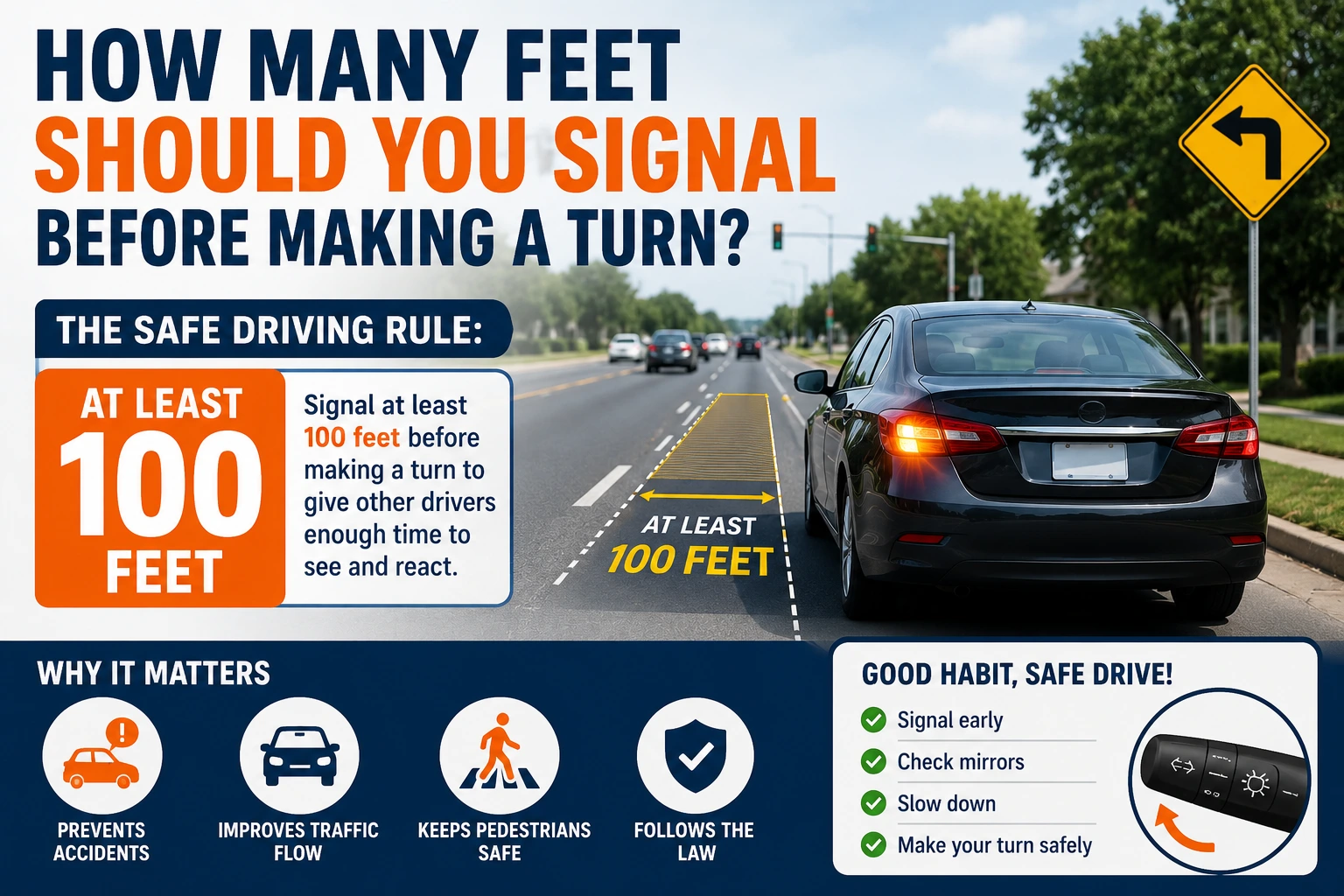
The standard rule in most driving manuals is:
Signal at least 100 feet before making a turn.
This gives other road users enough time to recognize your intentions and react safely.
Many states and jurisdictions require drivers to signal continuously during the last 100 feet before turning.
Why Turn Signals Matter
Turn signals are a form of communication.
Unlike talking to other drivers, signaling uses flashing lights to tell people what you plan to do next.
When you signal properly, you help:
- Prevent rear-end collisions
- Reduce intersection accidents
- Improve traffic flow
- Increase pedestrian safety
- Avoid confusion among drivers
Drivers who fail to signal often surprise other road users, increasing crash risks.
How Many Feet Should You Signal Before Making a Turn?
The accepted driving standard is:
At least 100 feet before the turn.
This applies to:
- Left turns
- Right turns
- Entering driveways
- Exiting parking lots
- Turning at intersections
Standard Driving Rule
Most driver’s education programs teach the 100-foot rule because it provides enough warning for nearby traffic.
Think of it this way:
The earlier people know what you’re planning, the more time they have to adjust their speed and position.
Why 100 Feet Is Recommended
A distance of 100 feet allows:
- Drivers behind you to slow down
- Pedestrians to prepare for crossing changes
- Cyclists to react safely
- Oncoming traffic to understand your intentions
Without adequate warning, traffic conflicts become more likely.
Understanding the 100-Foot Rule
Many new drivers know the rule but struggle to estimate what 100 feet actually looks like.
What Does 100 Feet Look Like?
Approximately:
- One-third of a football field
- About 7–8 average car lengths
- Around 30 meters
These comparisons make it easier to judge distance while driving.
Visualizing the Distance
Imagine approaching an intersection.
You should activate your turn signal before reaching the final 7–8 car lengths leading up to the turn.
With practice, estimating this distance becomes automatic.
State Driving Laws and Turn Signal Requirements
Traffic laws vary slightly between states and countries.
However, many jurisdictions share a similar requirement:
Signal continuously for at least the last 100 feet before turning.
Some locations may require:
| Situation | Typical Requirement |
|---|---|
| Left Turn | 100 feet |
| Right Turn | 100 feet |
| Lane Change | Several seconds before moving |
| Highway Exit | Earlier signaling recommended |
| Entering Driveway | 100 feet when practical |
Always review your local driver’s handbook because exact rules may vary.
How to Signal Properly Before Turning
Using your turn signal correctly involves more than simply flipping a switch.
Step-by-Step Process
Step 1: Check Traffic
Look ahead and assess traffic conditions.
Step 2: Activate Signal Early
Turn on your signal at least 100 feet before the turn.
Step 3: Check Mirrors
Verify surrounding traffic positions.
Step 4: Reduce Speed Gradually
Begin slowing down smoothly.
Step 5: Complete the Turn
Turn safely while keeping the signal active.
Step 6: Cancel the Signal
Most vehicles automatically cancel after the turn.
Check to ensure it has turned off.
Left Turn Signaling
When making a left turn:
- Signal at least 100 feet beforehand
- Move into the proper lane
- Watch for oncoming traffic
- Yield when required
Left turns generally involve more risk because they cross traffic lanes.
Right Turn Signaling
For right turns:
- Signal early
- Stay near the curb or right lane
- Watch for cyclists
- Check pedestrian crossings
Many collisions occur because drivers fail to notice pedestrians before turning right.
Turn Signal Distance Chart
| Driving Situation | Recommended Signaling Distance |
|---|---|
| Residential Turn | 100 feet |
| City Intersection | 100 feet |
| Left Turn | 100 feet |
| Right Turn | 100 feet |
| Driveway Entry | 100 feet |
| Highway Exit | 300–500 feet when possible |
| Lane Change | 3–5 seconds beforehand |
This chart provides a quick reference for common driving situations.
Real-World Driving Examples
Residential Streets
Imagine driving through a neighborhood at 25 mph.
Signal approximately 100 feet before your intended turn.
This gives nearby drivers enough notice.
City Driving
Urban traffic is often crowded.
Signaling early helps:
- Buses
- Cyclists
- Pedestrians
- Other motorists
understand your next move.
Highway Exits
Highway speeds require earlier warnings.
Although the 100-foot rule remains common for turns, many experts recommend signaling several hundred feet before an exit ramp.
At higher speeds, drivers need additional reaction time.
Benefits of Signaling Early
Proper signaling offers several advantages.
Improved Safety
Early communication prevents sudden movements.
Better Traffic Flow
Drivers can adjust without abrupt braking.
Reduced Accident Risk
Many crashes occur because intentions are unclear.
Easier Driving Test Success
Examiners pay close attention to signaling habits.
Greater Driver Confidence
Good signaling habits make driving smoother and less stressful.
Common Turn Signal Mistakes
Even experienced drivers sometimes make signaling errors.
Signaling Too Late
One of the most common mistakes is activating the signal just before turning.
This provides little warning.
Forgetting to Signal
Failing to signal entirely can create dangerous confusion.
Leaving the Signal On
Drivers occasionally forget to cancel the signal after turning.
This sends misleading information.
Signaling After Braking
Ideally, signal first, then begin slowing down.
This sequence gives others advance notice.
Using Signals Incorrectly
Signals should reflect your actual intentions, not accidental switch movements.
Tips to Pass Your Driving Test
Driving examiners closely monitor signaling behavior.
Follow these tips:
Signal Early
Use the 100-foot rule consistently.
Check Mirrors
Always combine signaling with mirror checks.
Make Signals Obvious
Avoid last-second signaling.
Practice Frequently
Build habits before test day.
Follow Examiner Instructions
Use signals even if the road appears empty.
Examiners want to see safe habits.
Why Proper Signaling Improves Road Safety
Traffic safety depends on predictable behavior.
When drivers communicate clearly:
- Fewer crashes occur
- Traffic moves smoothly
- Pedestrians feel safer
- Cyclists can react appropriately
- Road rage incidents decrease
Turn signals may seem small, but they play a major role in reducing roadway risks.
Every signal provides information that helps other road users make better decisions.
Strong Summary: How Many Feet Should You Signal Before Making a Turn?
The answer to how many feet should you signal before making a turn is generally at least 100 feet before the turn. This rule is widely taught in driver’s education programs and appears in many traffic laws. Signaling early gives other drivers, cyclists, and pedestrians enough time to understand your intentions and react safely.
Whether you’re making a left turn, right turn, entering a driveway, or preparing for a driving test, using your turn signal correctly is one of the easiest ways to improve safety and demonstrate responsible driving habits.
9. FAQs
FAQ 1: How many feet before a turn should you signal?
You should generally signal at least 100 feet before making a turn.
FAQ 2: Is signaling 100 feet before turning required by law?
Many states and jurisdictions require signaling continuously during the final 100 feet before a turn, but local laws may vary.
FAQ 3: Should I signal before braking?
Yes. In most situations, signal first and then begin slowing down so other drivers understand your intentions.
FAQ 4: Do I need to signal if no one is around?
Yes. During driving tests and safe driving practice, you should signal regardless of visible traffic.
FAQ 5: How far before a highway exit should I signal?
Highway exits often require earlier signaling because of higher speeds. Many experts recommend signaling several hundred feet before the exit ramp.
10. Conclusion
Understanding how many feet should you signal before making a turn is essential for safe and responsible driving. The standard recommendation is to activate your turn signal at least 100 feet before turning, allowing other road users adequate time to react. Proper signaling reduces accidents, improves traffic flow, and helps drivers pass licensing exams. By developing consistent signaling habits and avoiding common mistakes, you can become a safer and more confident driver every time you get behind the wheel.
Discover more