
If you are planning a roofing project, one of the first questions you may ask is: how many square feet shingles in a bundle? Understanding shingle coverage is important because it helps you estimate materials, control costs, and avoid running short during installation.
Most roofing shingles are sold in bundles, not individual pieces. However, the amount of coverage each bundle provides depends on the shingle type, brand, and roof design.
In this guide, you will learn exactly how many square feet a bundle of shingles covers, how roofing squares work, and how to calculate the number of bundles you need for your roof.
Understanding Roofing Measurements
Before calculating shingle coverage, you need to understand a basic roofing term: the roofing square.
What Is a Roofing Square?
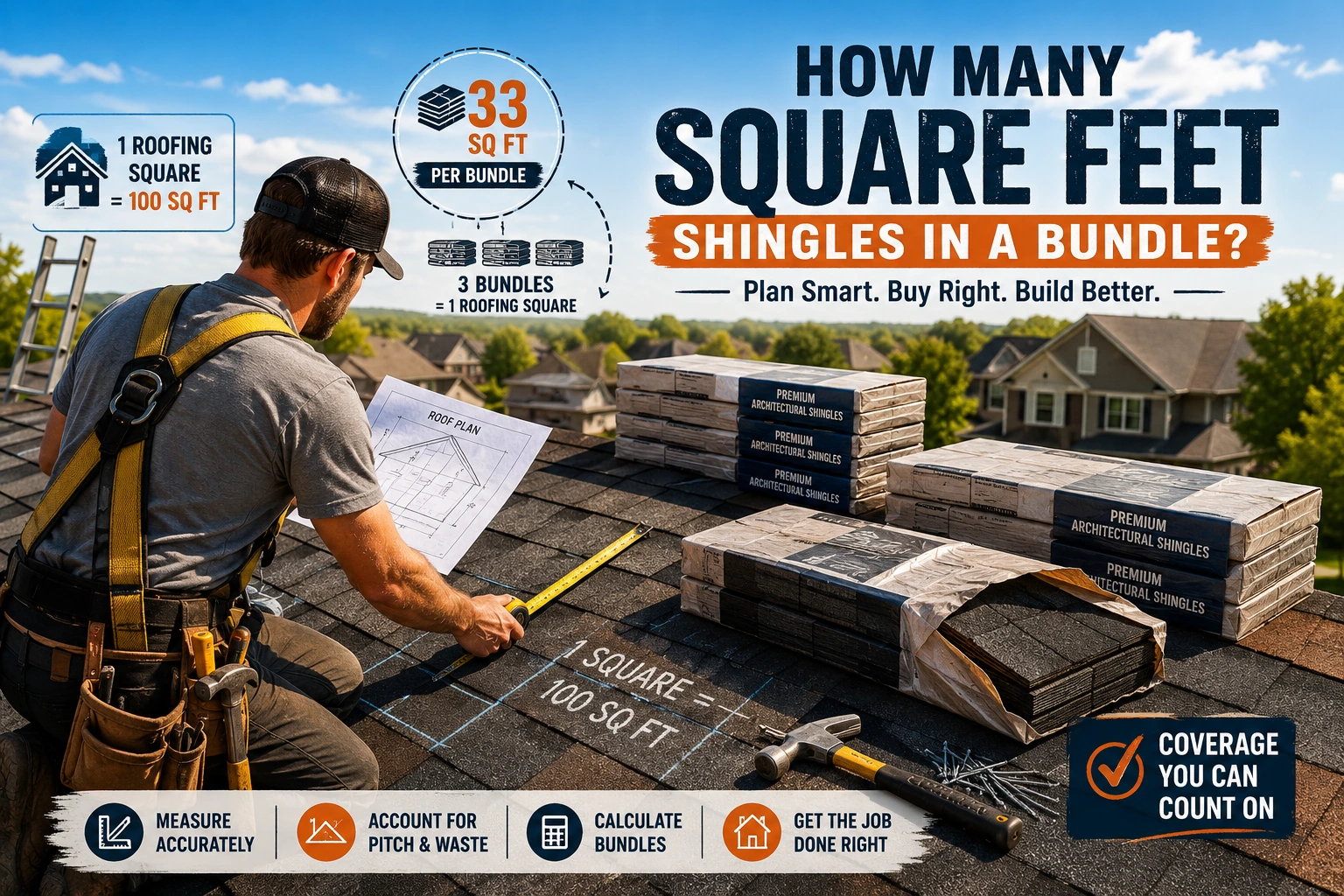
In roofing, a square is a unit of measurement equal to:
1 roofing square=100 square feet
Roofers use squares because roofs are large surfaces, and measuring everything in square feet alone becomes less practical.
For example:
- 10 squares = 1,000 square feet
- 20 squares = 2,000 square feet
- 30 squares = 3,000 square feet
Why Roofing Materials Are Sold in Bundles
Shingles are packaged in bundles for easier transportation and installation. A roofing square usually requires multiple bundles.
Most standard asphalt shingles require:
3 bundles≈100 square feet
That means one bundle generally covers around 33 square feet.
However, this can vary depending on the shingle design.
How Many Square Feet Does One Bundle of Shingles Cover?
The most common answer is:
1 bundle of shingles≈33.3 square feet
This estimate applies to standard asphalt shingles when three bundles equal one roofing square.
Still, not all shingles are identical. Coverage depends on:
- Shingle thickness
- Material type
- Brand specifications
- Roof design
- Installation pattern
Some premium shingles are thicker and heavier, meaning fewer shingles fit in a bundle. As a result, coverage per bundle decreases.
Shingle Coverage by Type
Different roofing shingles provide different coverage areas.
Three-Tab Shingles
Three-tab shingles are lightweight and flat. They are among the most affordable roofing materials.
Typical coverage:
- Around 33 square feet per bundle
- 3 bundles per roofing square
These shingles are commonly used on residential homes with basic roof designs.
Architectural Shingles
Architectural shingles are thicker and more durable than three-tab shingles.
Typical coverage:
- 28–33 square feet per bundle
- Usually 3 to 4 bundles per square
These shingles offer better wind resistance and improved curb appeal.
Premium and Designer Shingles
Designer shingles imitate slate, wood shake, or tile roofs.
Typical coverage:
- 20–30 square feet per bundle
- Often 4–5 bundles per square
They cost more but provide a high-end appearance and longer lifespan.
How Many Bundles Are in One Roofing Square?
The number of bundles needed for one roofing square depends on the shingle product.
Here is the standard formula:
Bundles Needed=coverage per bundle100 square feet
Most roofs use:
| Shingle Type | Bundles Per Square | Approximate Coverage Per Bundle |
|---|---|---|
| Three-tab shingles | 3 | 33.3 sq ft |
| Architectural shingles | 3–4 | 25–33 sq ft |
| Premium shingles | 4–5 | 20–25 sq ft |
Always check the manufacturer’s packaging because exact coverage varies.
Roofing Shingle Coverage Table
This table helps estimate how many bundles you may need for common roof sizes.
| Roof Size | Roofing Squares | Bundles Needed (3 per square) |
|---|---|---|
| 500 sq ft | 5 | 15 bundles |
| 1,000 sq ft | 10 | 30 bundles |
| 1,500 sq ft | 15 | 45 bundles |
| 2,000 sq ft | 20 | 60 bundles |
| 2,500 sq ft | 25 | 75 bundles |
| 3,000 sq ft | 30 | 90 bundles |
These estimates do not include waste material.
How to Calculate How Many Shingle Bundles You Need
Calculating roofing materials accurately prevents overspending and delays.
Step 1: Measure Roof Area
Start by measuring the length and width of each roof section.
Use this formula:
Roof Area=Length×Width
Add all roof sections together to get total square footage.
Step 2: Account for Roof Pitch
Steep roofs have more surface area than flat roofs.
A steep roof may require:
- More shingles
- More labor
- More waste material
Roof pitch multipliers help adjust measurements accurately.
Step 3: Add a Waste Factor
Roofing projects always generate waste due to:
- Cuts
- Valleys
- Hips
- Starter rows
- Damaged shingles
Most professionals add:
- 10% waste for simple roofs
- 15–20% waste for complex roofs
Use this formula:
Total Materials=Roof Area×(1+Waste Factor)
Real World Examples
Practical examples make roofing calculations easier.
Example 1: 1,000 Square Foot Roof
A 1,000-square-foot roof equals:
1000÷100=10 squares
If three bundles cover one square:
10×3=30 bundles
Add 10% waste:
30×1.10=33 bundles
You would need about 33 bundles.
Example 2: 1,500 Square Foot Roof
Calculation:
1500÷100=15 squares
Bundles needed:
15×3=45 bundles
With waste:
45×1.10≈50 bundles
You should purchase about 50 bundles.
Example 3: 2,000 Square Foot Roof
Roof size:
2000÷100=20 squares
Bundles required:
20×3=60 bundles
Including waste:
60×1.10=66 bundles
A safe estimate would be 66 bundles.
Common Roofing Calculation Mistakes
Many homeowners underestimate roofing materials. Here are the most common mistakes.
Ignoring Roof Pitch
A roof with a steep slope has more surface area than it appears from ground level.
Forgetting Waste Material
Not adding extra shingles can leave you short near the end of the project.
Mixing Shingle Types
Different shingles have different coverage rates. Never assume all bundles cover the same area.
Not Checking Manufacturer Specifications
Always read the packaging details before buying materials.
Expert Tips for Buying Roofing Shingles
Buying shingles is not only about square footage. Quality matters too.
Buy Extra Bundles
It is smart to purchase 1–2 extra bundles for future repairs.
Match Dye Lots
Roof shingle colors can vary slightly between manufacturing batches. Buy all materials at once for consistent color.
Compare Warranty Coverage
Higher-quality shingles often come with better warranties and longer lifespans.
Choose the Right Shingle for Your Climate
Areas with strong winds, snow, or heavy rain may require architectural shingles instead of basic three-tab products.
Cost Considerations for Shingle Bundles
Roofing material prices vary by quality and region.
Average bundle prices:
| Shingle Type | Average Cost Per Bundle |
|---|---|
| Three-tab shingles | $30–$40 |
| Architectural shingles | $40–$60 |
| Premium shingles | $60–$120 |
For example, a 2,000-square-foot roof requiring 66 bundles could cost:
- Around $2,000–$2,600 for basic shingles
- More for premium materials
Labor, underlayment, flashing, and ventilation are additional expenses.
When to Hire a Professional Roofer
DIY roofing can save money, but professional installation offers advantages.
Consider hiring a roofer if:
- Your roof is steep
- The roof is complex
- You lack roofing experience
- Safety is a concern
- Warranty protection matters
Professionals can also calculate materials more accurately and reduce waste.
FAQs
How many square feet shingles in a bundle usually cover?
Most standard asphalt shingle bundles cover about 33 square feet. Three bundles typically equal one roofing square.
How many bundles of shingles do I need for 2,000 square feet?
A 2,000-square-foot roof usually needs around 60 bundles, plus extra for waste. Most homeowners buy about 66 bundles total.
Do architectural shingles cover less area?
Yes. Architectural shingles are thicker, so bundles may cover slightly less area than three-tab shingles.
How many shingles are in one bundle?
The number varies by brand and style. A bundle may contain anywhere from 15 to 29 shingles.
Should I buy extra roofing shingles?
Yes. Buying extra bundles helps cover mistakes, waste, and future roof repairs.
Conclusion
Understanding how many square feet shingles in a bundle cover is essential for planning a successful roofing project. In most cases, one bundle covers approximately 33 square feet, and three bundles equal one roofing square.
However, shingle type, roof complexity, and waste factors all affect the final number of bundles needed. By measuring carefully, checking manufacturer specifications, and adding extra material for waste, you can avoid costly mistakes and keep your roofing project on track.
Whether you are replacing a small roof or estimating materials for a full home renovation, accurate shingle calculations will save time, money, and frustration.
discover more
how many square feet of run per chicken