
If you are planning a garage, workshop, warehouse, or even a small commercial structure, you may be asking: how many square feet is a 40 x 50 building?
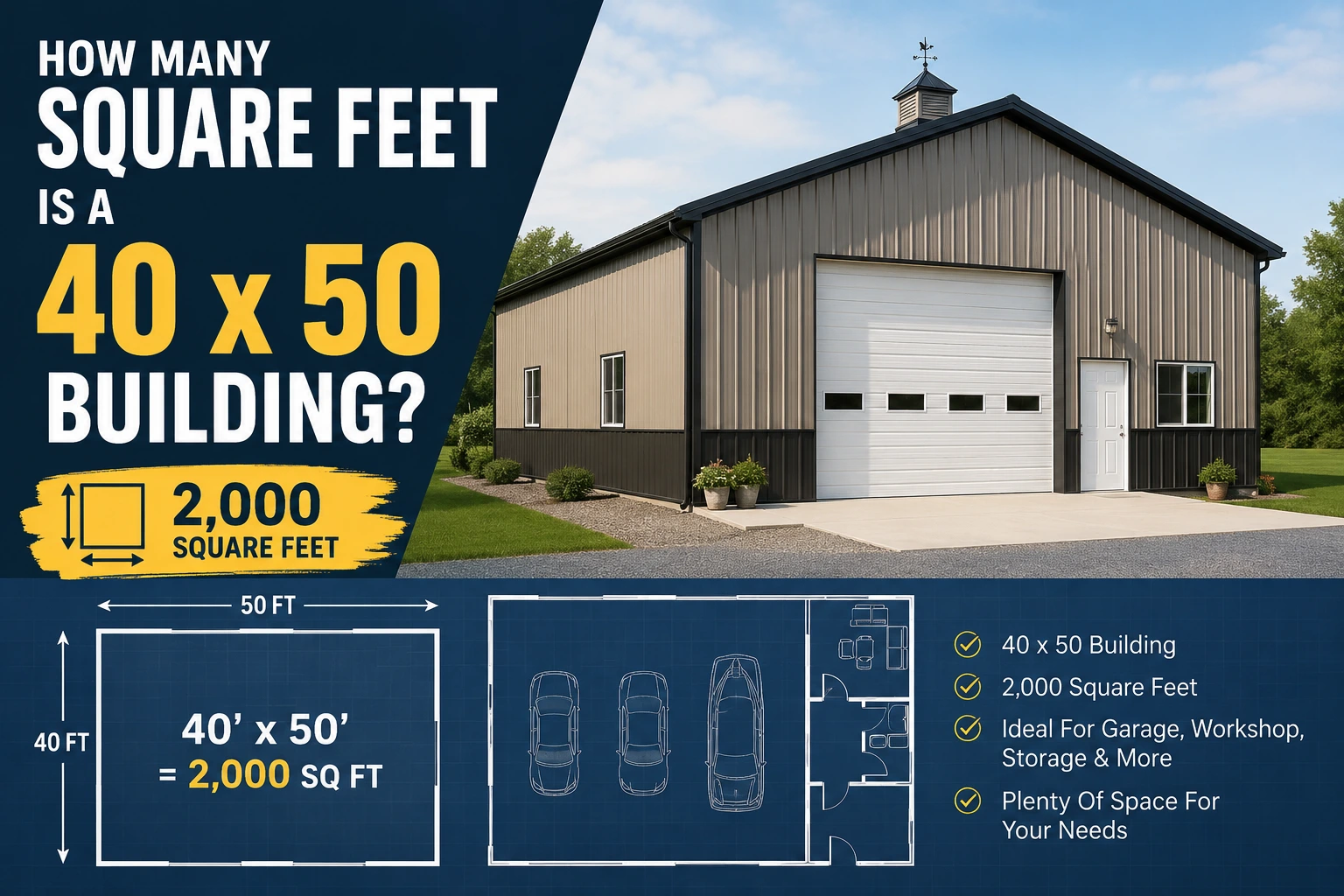
The answer is simple. A 40 x 50 building contains 2,000 square feet of space. You calculate it by multiplying the width by the length:
40×50=2000
While the math is easy, understanding what 2,000 square feet actually looks like is more important. Many people struggle to visualize building dimensions before construction starts. This guide explains the size, practical uses, layouts, costs, and planning considerations for a 40×50 building in simple terms.
Whether you are building a metal shop, storage space, barn, garage, or business property, this article will help you understand if this size is right for your needs.
Understanding Square Footage
What Is Square Footage?
Square footage measures the total floor area inside a building. It tells you how much usable space you have.
To calculate square feet, you multiply:
- Length × Width
For a rectangular building:
Square Feet=Length×Width
In this case:
- Width = 40 feet
- Length = 50 feet
So:
- 40 × 50 = 2,000 square feet
That means the building covers 2,000 square feet of ground space.
Why Building Size Matters
Knowing square footage helps with:
- Construction planning
- Estimating material costs
- Interior layout design
- Permit applications
- Property valuation
- Storage calculations
It also helps you decide whether the structure will meet your current and future needs.
How Many Square Feet Is a 40 x 50 Building?
A 40 x 50 building equals exactly 2,000 square feet.
Here is the full breakdown:
| Measurement | Value |
|---|---|
| Width | 40 feet |
| Length | 50 feet |
| Total Area | 2,000 square feet |
This is considered a medium-to-large building size for residential and commercial use.
Step-by-Step Calculation
Here is how to calculate it manually:
Step 1: Measure the width
- 40 feet
Step 2: Measure the length
- 50 feet
Step 3: Multiply both numbers
40×50=2000 sq ft
Final result:
- 2,000 square feet
The same formula works for garages, homes, warehouses, and offices.
Visualizing the Size of a 40×50 Building
Many people understand numbers but still wonder how big the space actually feels.
A 40×50 building is large enough for many practical purposes.
Comparison With Common Spaces
Here are some easy comparisons:
| Space Type | Approximate Size |
|---|---|
| Small apartment | 600–900 sq ft |
| Average house | 1,500–2,500 sq ft |
| 2-car garage | 400–600 sq ft |
| 40×50 building | 2,000 sq ft |
This means a 40×50 structure is bigger than many homes and several times larger than a standard garage.
Parking Capacity
A 40×50 building can usually fit:
- 6 to 8 standard vehicles
- RV storage
- Boats and trailers
- Work trucks
- Farm equipment
Actual capacity depends on layout and interior walls.
Residential Uses
Some people convert 40×50 buildings into:
- Barndominiums
- Tiny home compounds
- Loft apartments
- Multi-room workshops
- Live-work spaces
With smart planning, 2,000 square feet can comfortably support both living and storage areas.
Common Uses for a 40 x 50 Building
One reason this building size is popular is versatility.
Garage
A 40×50 garage is ideal for:
- Car collectors
- Mechanics
- RV owners
- Equipment storage
You can include:
- Vehicle bays
- Tool storage
- Workbenches
- Office space
Workshop
Woodworkers, welders, and contractors often choose 40×50 workshops because they provide enough room for:
- Machinery
- Storage shelves
- Assembly areas
- Material handling
The wide-open space makes workflow easier.
Warehouse
A 2,000-square-foot warehouse works well for small businesses.
It can store:
- Inventory
- Shipping supplies
- Equipment
- Retail stock
Some owners also use it for e-commerce operations.
Small Business Space
A 40×50 commercial building can support:
- Auto repair shops
- Fitness studios
- Retail stores
- Office setups
- Service businesses
The layout can be customized based on operational needs.
Barn or Farm Storage
Farmers commonly use 40×50 structures for:
- Hay storage
- Tractor parking
- Livestock equipment
- Feed storage
Metal buildings are especially popular because they are durable and low maintenance.
Layout Ideas for a 40×50 Building
The layout affects how functional your building becomes.
Open Floor Plan
An open floor plan works best for:
- Warehouses
- Vehicle storage
- Workshops
- Event spaces
Benefits include:
- Easier movement
- Better visibility
- Flexible future changes
Office and Storage Combination
Many businesses divide the structure into:
| Area | Purpose |
|---|---|
| Front section | Office |
| Middle section | Workspace |
| Rear section | Storage |
This setup improves organization and professionalism.
Living Space Conversion
A 40×50 building can also become a comfortable home.
Possible features include:
- 2–3 bedrooms
- Kitchen
- Bathrooms
- Living room
- Garage area
High ceilings and loft designs can make the space feel even larger.
Cost Considerations for a 40×50 Building
Understanding square footage also helps estimate costs.
Construction Costs
Construction prices vary depending on:
- Building materials
- Labor rates
- Foundation type
- Insulation
- Interior finishing
- Location
Average estimates:
| Building Type | Cost Range |
|---|---|
| Basic metal shell | Lower cost |
| Finished workshop | Medium cost |
| Residential conversion | Higher cost |
In many areas, total construction costs can range from tens of thousands to well over six figures.
Metal vs Wood Buildings
Both materials have advantages.
Metal Buildings
Pros:
- Durable
- Faster installation
- Lower maintenance
- Pest resistant
Cons:
- Insulation may cost more
- Industrial appearance
Wood Buildings
Pros:
- Traditional appearance
- Easier interior modifications
- Better natural insulation
Cons:
- Higher maintenance
- Termite risk
- Longer construction time
Additional Expenses
People often forget about extra costs such as:
- Permits
- Electrical work
- Plumbing
- HVAC systems
- Concrete slabs
- Insulation
- Driveways
These expenses can significantly affect the final budget.
Benefits of a 40 x 50 Building
There are several reasons why 40×50 buildings are extremely popular.
Excellent Space-to-Cost Ratio
At 2,000 square feet, you get substantial usable space without needing a massive property.
Flexible Usage
You can use the building for:
- Residential purposes
- Commercial operations
- Storage
- Agriculture
- Recreation
Easier Expansion
Many owners later expand by adding:
- Lean-tos
- Additional bays
- Storage sections
- Offices
Better Organization
The larger floor area allows better organization of:
- Tools
- Vehicles
- Inventory
- Equipment
Higher Property Value
Well-designed buildings often increase property appeal and resale value.
Common Mistakes When Calculating Building Size
People sometimes make simple measurement mistakes.
Confusing Linear Feet With Square Feet
Linear feet measure length only. Square feet measure area.
Forgetting Interior Walls
Interior walls reduce usable floor space slightly.
Ignoring Ceiling Height
Floor area matters, but ceiling height affects storage capacity too.
Not Planning for Future Needs
Many people underestimate future storage or workspace requirements.
Choosing a slightly larger building often saves money long term.
Expert Tips Before Building a 40×50 Structure
Here are practical tips from construction professionals.
Check Local Building Codes
Always review:
- Zoning laws
- Setback requirements
- Permit rules
Think About Future Expansion
Leave extra land around the building if possible.
Prioritize Door Size
Large doors improve:
- Vehicle access
- Equipment movement
- Ventilation
Plan Electrical Needs Early
Consider:
- Lighting
- Machinery power
- HVAC systems
- Internet wiring
Use Quality Insulation
Good insulation improves:
- Energy efficiency
- Comfort
- Moisture control
Practical Examples of a 40×50 Building
Here are a few real-world examples.
Example 1: Auto Workshop
A mechanic uses the building for:
- 4 repair bays
- Tool storage
- Waiting office
- Parts inventory
Example 2: Family Barndominium
A family converts the space into:
- 2 bedrooms
- Kitchen
- Living room
- Attached garage
Example 3: Farm Equipment Storage
A farmer stores:
- Tractor
- Hay bales
- Feed supplies
- Utility trailers
These examples show how flexible 2,000 square feet can be.
9. FAQs
Is a 40×50 building considered large?
Yes. A 40×50 building is considered a large residential garage or medium commercial structure. It provides 2,000 square feet of usable space.
How many cars fit in a 40×50 building?
Most 40×50 buildings can fit between 6 and 8 standard vehicles depending on layout, storage areas, and wall placement.
How much does a 40×50 metal building cost?
Costs vary by location, materials, and finishes. A basic shell costs much less than a fully insulated or residential-style structure.
Can you live in a 40×50 building?
Yes. Many people convert 40×50 structures into barndominiums or live-work spaces with bedrooms, kitchens, and bathrooms.
How do you calculate square footage?
Multiply the building width by the length.
Square Feet=Width×Length
10. Conclusion
So, how many square feet is a 40 x 50 building? The answer is 2,000 square feet.
That amount of space is large enough for garages, workshops, warehouses, business operations, storage buildings, and even residential conversions. A 40×50 structure offers an excellent balance between affordability and functionality, making it one of the most popular building sizes today.
Before starting construction, carefully plan your layout, future expansion needs, insulation, and utility requirements. When designed properly, a 40×50 building can provide flexible and valuable space for many years.
Discover more