
If you have ever watched a soccer match or practiced on a soccer field, you may have wondered, “how many feet wide is a soccer goal?” Soccer goals look massive during professional matches, especially when elite players score incredible goals from long distances. However, most people are surprised to learn the exact dimensions of a regulation soccer goal and how those measurements affect gameplay, goalkeeper performance, and training.
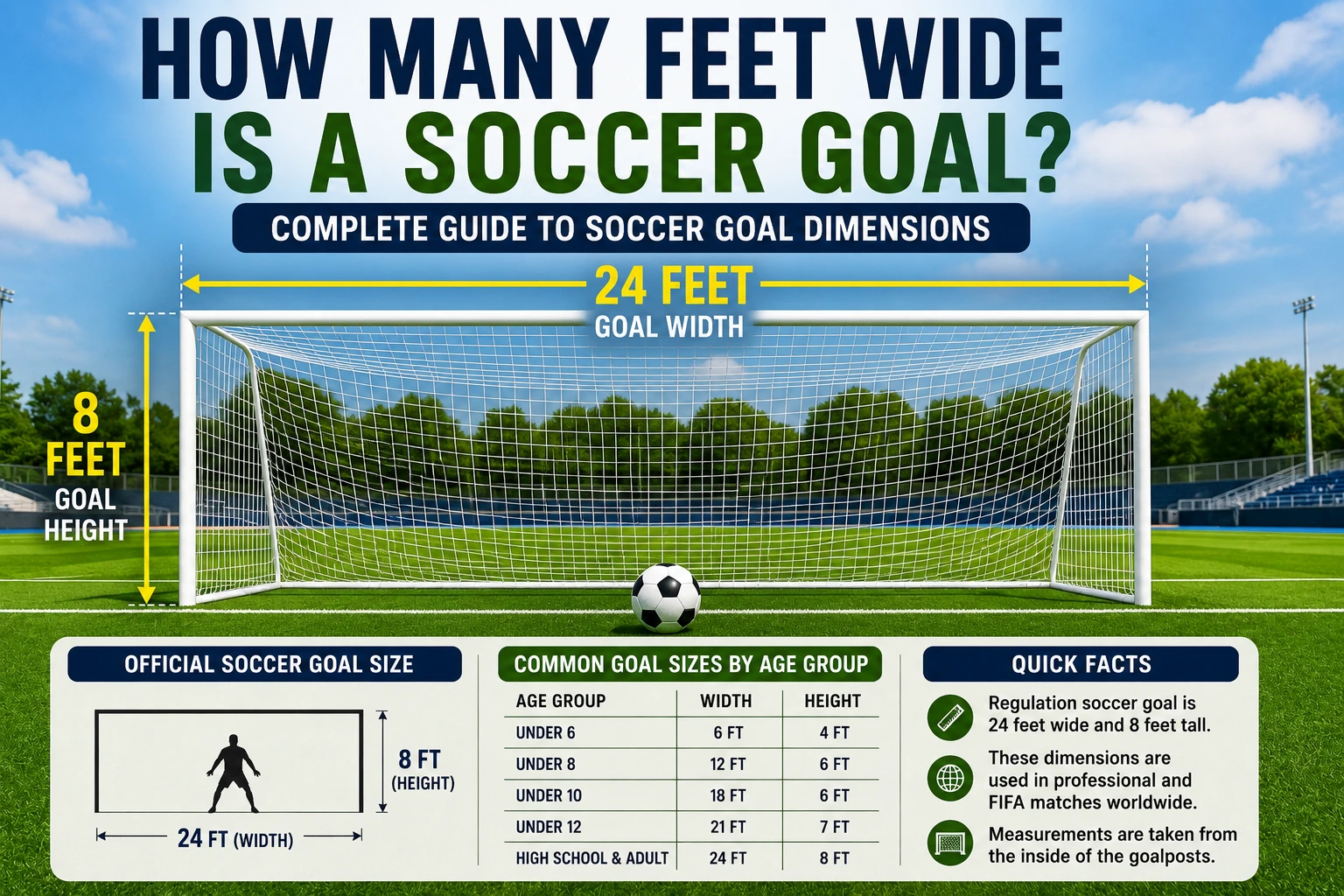
The official width of a professional soccer goal is 24 feet wide. This standard is used in FIFA competitions, professional leagues, international tournaments, and most adult soccer matches around the world. Along with the width, the official height of a soccer goal is 8 feet tall.
Understanding soccer goal dimensions is important for players, coaches, parents, schools, and sports facility owners. Whether you are buying a backyard goal, coaching youth soccer, or learning the rules of the game, knowing the correct measurements helps ensure proper training and fair competition.
Official Soccer Goal Dimensions
Soccer goal dimensions are standardized under FIFA regulations to maintain consistency in matches worldwide.
FIFA Regulation Goal Size
According to official FIFA rules, a full-size soccer goal measures:
- 24 feet wide
- 8 feet tall
24 feet wide×8 feet tall
These dimensions apply to:
- Professional soccer
- International tournaments
- Adult recreational leagues
- College soccer matches
- Most high school competitions
The measurements are taken from the inside edges of the goalposts and crossbar.
Width and Height Measurements
The width refers to the horizontal distance between the two goalposts. The height measures the distance from the ground to the bottom of the crossbar.
Goal dimensions are designed to balance:
- Offensive scoring opportunities
- Defensive challenge
- Goalkeeper skill requirements
- Match excitement
If goals were significantly smaller or larger, the nature of soccer would change dramatically.
How Many Feet Wide Is a Soccer Goal Exactly?
The exact answer is simple:
24 feet
A regulation soccer goal is exactly 24 feet wide.
Standard Professional Dimensions
The official full-size goal dimensions are:
| Measurement | Size |
|---|---|
| Width | 24 feet |
| Height | 8 feet |
| Width in yards | 8 yards |
| Width in meters | 7.32 meters |
These dimensions have remained largely unchanged for decades because they create balanced gameplay between attackers and goalkeepers.
Goal Size Conversion Chart
| Unit | Goal Width |
|---|---|
| Feet | 24 ft |
| Inches | 288 inches |
| Yards | 8 yards |
| Meters | 7.32 meters |
This conversion chart is useful for coaches and field builders using different measurement systems.
Why Soccer Goal Size Matters
The size of the goal affects nearly every aspect of soccer.
Fair Gameplay
Standardized goal dimensions ensure fairness. Every professional field worldwide uses the same goal size so players compete under identical conditions.
This consistency helps maintain:
- Accurate player statistics
- Balanced scoring rates
- Comparable competition levels
- Fair goalkeeper expectations
Goalkeeper Training and Strategy
Goalkeepers train specifically for a 24-foot-wide goal. Their positioning, diving angles, and reflex training depend heavily on goal dimensions.
A wider goal:
- Creates more scoring opportunities
- Requires faster reactions
- Demands better positioning
Even a small size change could significantly impact goalkeeper performance.
Soccer Goal Dimensions by Age Group
Not every soccer goal is 24 feet wide. Youth leagues use smaller goals to match player size and skill levels.
Youth Soccer Goals
Young children use smaller goals because full-size goals are too difficult for developing players.
Common youth goal sizes:
| Age Group | Goal Size |
|---|---|
| Under 6 | 6 ft × 4 ft |
| Under 8 | 12 ft × 6 ft |
| Under 10 | 18 ft × 6 ft |
| Under 12 | 21 ft × 7 ft |
Smaller goals help young players:
- Develop shooting accuracy
- Build confidence
- Learn goalkeeping basics
High School Soccer Goals
Most high school soccer programs use full-size goals:
- 24 feet wide
- 8 feet tall
This prepares players for higher-level competition.
Professional Soccer Goals
Professional and FIFA-approved matches always use regulation goals measuring:
24 ft×8 ft
These dimensions apply across major leagues worldwide.
Soccer Goal Measurement Table
| Goal Type | Width | Height |
|---|---|---|
| Professional | 24 ft | 8 ft |
| High School | 24 ft | 8 ft |
| Youth U12 | 21 ft | 7 ft |
| Youth U10 | 18 ft | 6 ft |
| Backyard Mini Goal | 4–12 ft | 3–6 ft |
| Futsal Goal | 10 ft | 6.5 ft |
This table helps coaches and parents choose the correct goal size.
How Soccer Goals Are Measured
Understanding how goals are measured is important for proper field setup.
Measuring Width
Goal width is measured:
- From the inside edge of one goalpost
- To the inside edge of the opposite goalpost
This ensures consistent playing dimensions.
Measuring Height and Depth
Height is measured from:
- Ground level
- To the underside of the crossbar
Depth varies depending on goal design and net style.
Professional goals usually have deeper net systems to:
- Prevent rebounds
- Improve visibility
- Protect goalkeepers
Different Types of Soccer Goals
Soccer goals come in many designs depending on the level of play.
Portable Goals
Portable goals are lightweight and movable. They are popular for:
- Practice sessions
- School sports
- Youth leagues
Benefits include:
- Easy transportation
- Quick setup
- Flexible field positioning
Backyard Soccer Goals
Families often buy smaller goals for home use.
Common backyard goal widths include:
- 6 feet
- 8 feet
- 12 feet
These sizes are ideal for children and casual play.
Training Goals
Training goals help players practice:
- Shooting accuracy
- Passing drills
- Goalkeeper reactions
Some training goals intentionally use smaller dimensions to improve precision.
Soccer Goal vs Other Sports Goals
Soccer goals are much different from goals used in other sports.
Soccer vs Hockey Goals
| Sport | Goal Width |
|---|---|
| Soccer | 24 ft |
| Hockey | 6 ft |
Soccer goals are significantly larger because gameplay occurs over longer distances.
Soccer vs Futsal Goals
Futsal uses smaller indoor goals:
- 10 feet wide
- 6.5 feet tall
This suits the faster indoor playing style.
Soccer vs Football Uprights
American football uprights focus on vertical kicking rather than horizontal scoring width, making their design completely different.
Common Mistakes When Measuring Soccer Goals
Many people misunderstand goal measurements.
Measuring Outside the Posts
Official measurements always use the inside edges of the goalposts.
Buying the Wrong Size for Kids
Some parents buy full-size goals for young players. Oversized goals can:
- Hurt confidence
- Reduce skill development
- Make goalkeeping difficult
Ignoring Goal Safety
Improperly secured goals can tip over and cause injuries. Always anchor portable goals safely.
Confusing Soccer and Futsal Goals
Futsal goals are much smaller than outdoor soccer goals. Mixing them up can create training problems.
Expert Tips for Choosing a Soccer Goal
Before buying a soccer goal, consider:
- Player age
- Available space
- Goal material
- Portability
- Net quality
- Safety anchors
Coaches often recommend:
- Smaller goals for skill development
- Durable frames for long-term use
- Weather-resistant nets for outdoor play
If space is limited, portable foldable goals can be a smart option.
Fun Facts About Soccer Goals
Here are some interesting facts:
- A regulation soccer goal is 288 inches wide
- FIFA standardized goal dimensions in the 1800s
- Professional goalkeepers cover enormous distances during matches
- Goal size has remained nearly unchanged for generations
These consistent measurements help maintain the integrity of the sport.
Practical Examples of Soccer Goal Width
To better imagine 24 feet:
- It is about the length of a large SUV and a small car combined
- Roughly the width of a one-car garage door multiplied by three
- About 8 average adult walking steps
These comparisons make the dimensions easier to picture.
9. FAQs
How many feet wide is a professional soccer goal?
A professional soccer goal is 24 feet wide and 8 feet tall.
What is the official FIFA soccer goal size?
FIFA regulation soccer goals measure 24 feet wide by 8 feet high.
Are youth soccer goals smaller?
Yes, youth soccer goals are smaller to match player age and skill levels.
How wide is a soccer goal in meters?
A regulation soccer goal is 7.32 meters wide.
What is the height of a soccer goal?
A standard professional soccer goal is 8 feet tall.
10. Conclusion
Understanding how many feet wide is a soccer goal is important for players, coaches, parents, and soccer fans alike. A regulation soccer goal measures exactly 24 feet wide and 8 feet tall, following official FIFA standards used worldwide. These dimensions create balanced gameplay and help maintain consistency across all professional competitions. Youth leagues often use smaller goals to support player development, while training and backyard goals vary depending on purpose and available space. Whether you are buying equipment, coaching a team, or simply learning more about soccer, knowing official goal dimensions helps you better understand the game and its rules.
Discover more
how many toes do cats have on their back feet